The Best Beaches in Marseille: The Complete Guide
Looking for the best beaches in Marseille for a swim, a weekend or a full vacation? The city of Marseille spreads more than twenty kilometres of coast, from the fine sand of the Prado beaches to the pebble coves of the Corniche, from the shallow water of the family beaches to the calanques beaches of the national park and the Frioul islands. This travel guide and short list of favourites covers the city centre beaches you can reach on foot or by bus, the big family beaches of the 8th arrondissement, the wild coves of the south, the calanques, the beaches near Marseille along the Côte Bleue, and the train trips towards Cassis and the French Riviera. For each one, you get the simplest transportation from the Vieux Port, the real travel time in min, whether it is a 10 minute walk or a 20 minute drive, and practical info on facilities, water sports, boat tours in Marseille and swimming conditions. You will also find which beaches are suitable for children, where to eat after a swim, and which hotels in Marseille put you closest to the sea. All of them are easy to reach from Hôtel Amista, in the heart of the city, five minutes from the metro and the harbour.
City centre beaches, on foot or by bus
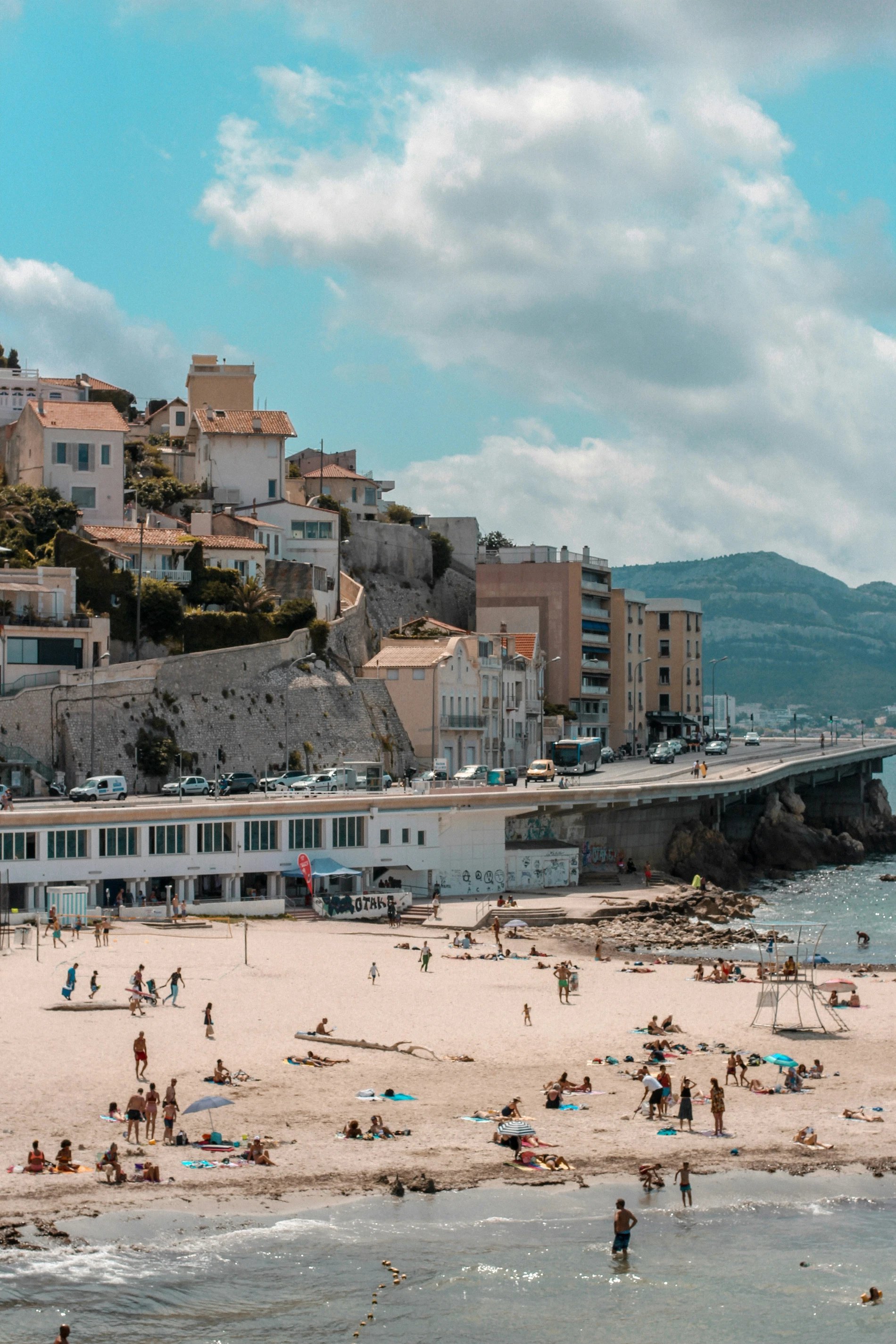
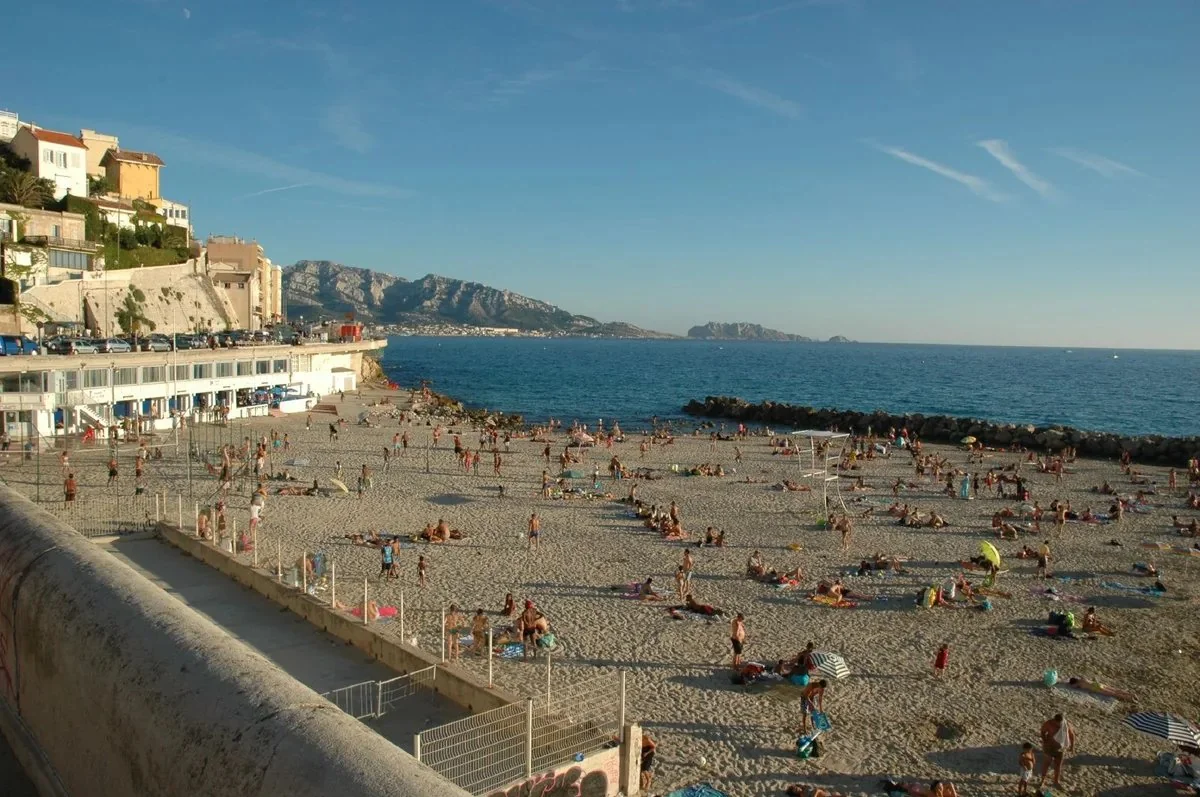
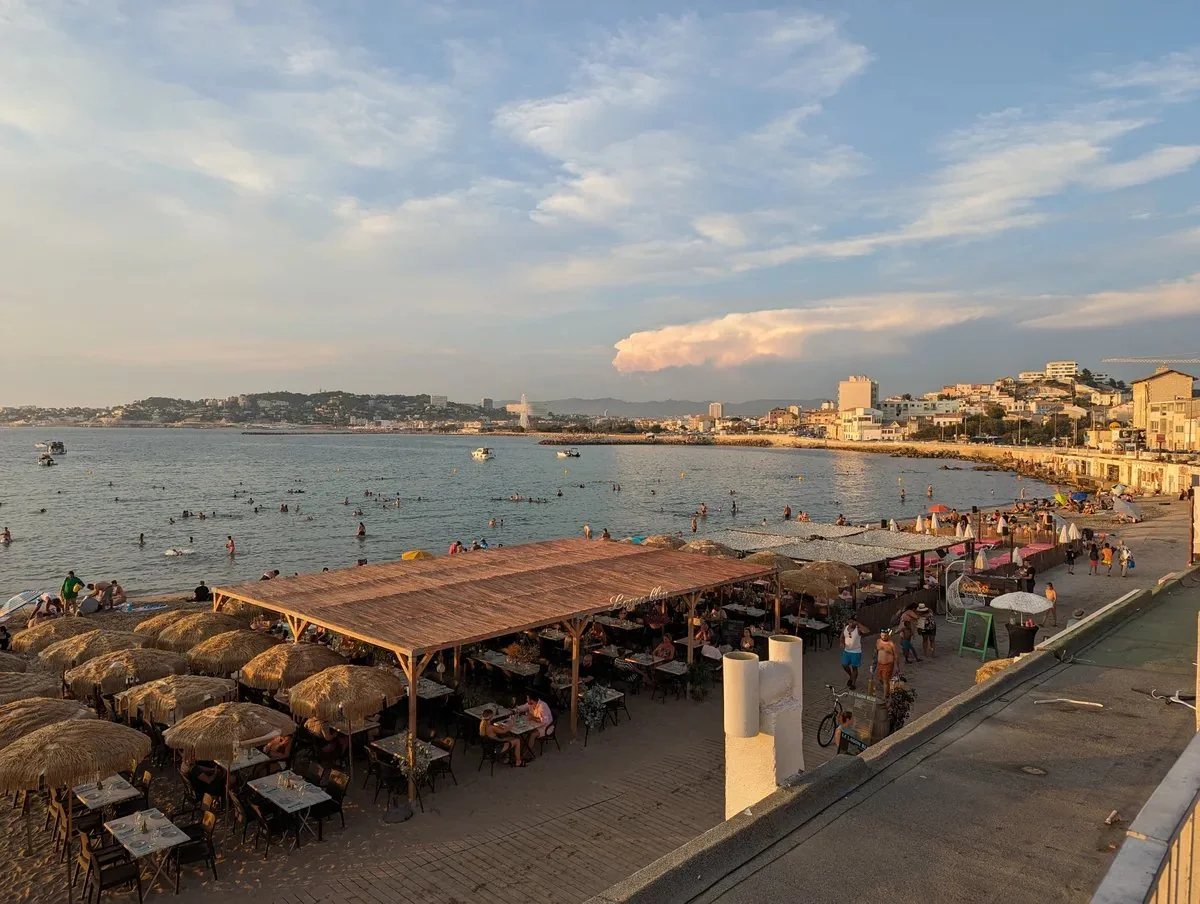
Marseille is one of the few large cities in France where you go from the city center to the sea in a quarter of an hour, and the distance from the Vieux Port is measured in bus stops rather than kilometres. The Plage des Catalans, in the 7th arrondissement, is the closest to the quays: 1.5 km on foot, or a few stops on bus 83, so it is accessible by bus with no connection. A strip of groomed Catalan sand, beach volleyball nets, a festive mood at the end of the day: the Catalan beach is the most famous urban beach of the city, and the Catalan cove next door is just as busy, very popular from the first warm days, and the only true sandy beach in the city centre.
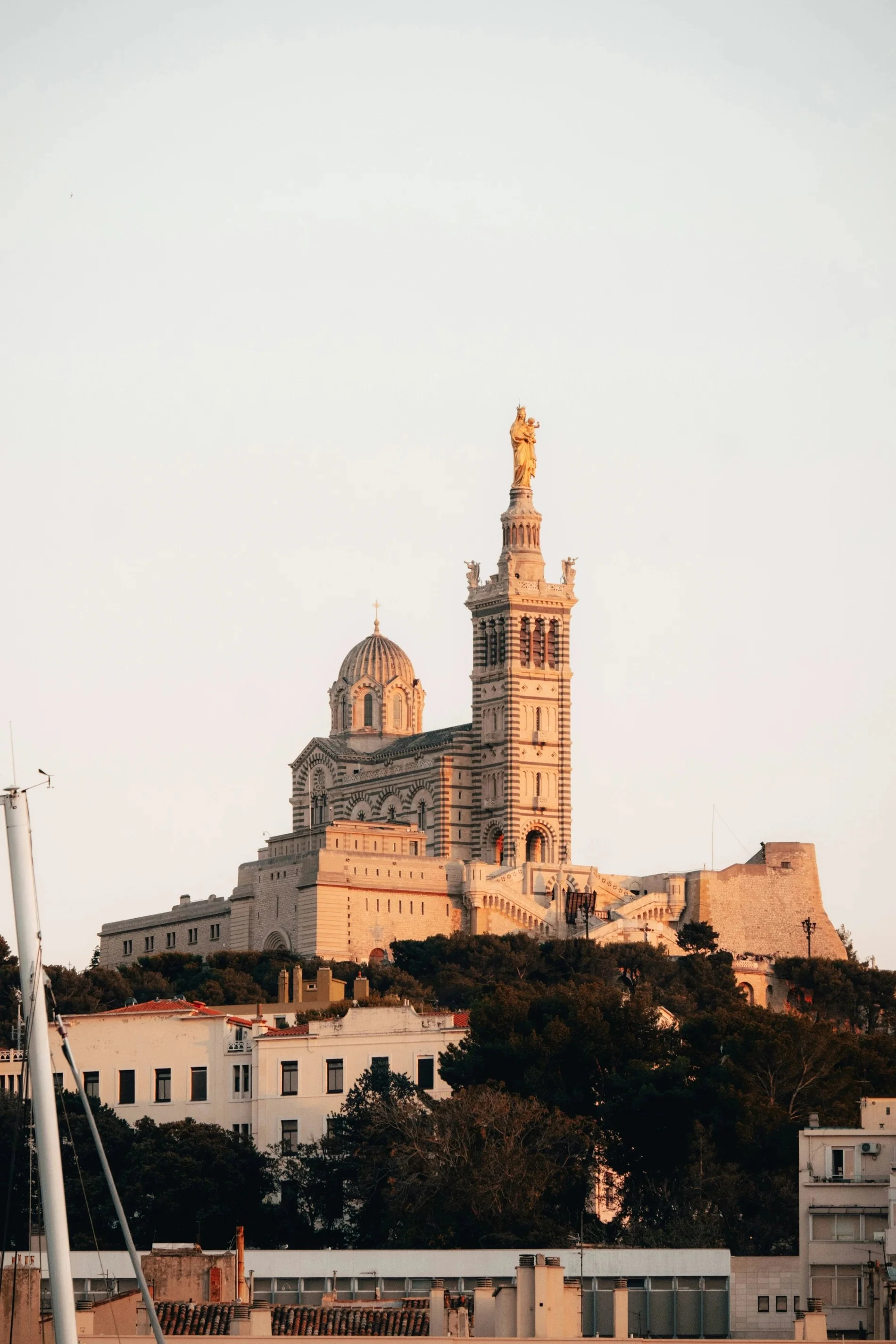
Further along the Corniche Kennedy, the Anse de Malmousque is worth the detour. This tiny cove of pebbles and rocks, wedged between villas, is accessed by a narrow flight of steps and offers clear water with a view of the islands. Malmousque is a pretty cove rather than a beach, and a nice place to read a book on a flat rock. Just after it, the Anse de la Fausse Monnaie and the Vallon des Auffes form a string of small fishing harbours where people swim between the boats, with Notre-Dame de la Garde in the background. Malmousque is the kind of spot a local keeps quiet about, so arrive early in summer. Every cove here is tiny, barely a strip of pebbles between two rocks, and each one has its own regulars.
The Plage du Prophète closes this series. Set below the Corniche, it is a family beach in the strict sense: monitored in season, with a lifeguard post, showers and toilets, and calm waters, with shallow water for small children at the entrance. Bus 83 runs the length of the Corniche from the quays and serves all three stops, which makes it the simplest option without a car. It stops 400 metres from Hôtel Amista, on rue des Récolettes, putting these three beaches about 20 min from your room. If you only have one afternoon to explore the coast, start here: the Catalan beach for a swim, the Corniche walk for the view, a snack bar for the sunset. Every travel blog and every Marseille blog calls it the classic afternoon here, and they are right.
The Prado beaches, the city's seaside resort
Further south, the Prado beaches form the largest seaside resort in Marseille, in the 8th arrondissement, between the Rond-Point du Prado and avenue Pierre Mendès France. A little-known fact: they were created from scratch in the 1970s with rubble from the metro works, which explains the wide lawns and the facilities. Prado Nord, Plage de l'Huveaune, Bonneveine, Borély: each attractive in its own way, each with its own crowd, between families, athletes and sunset watchers.
The site is as much about activities as about swimming: beach volleyball, skatepark, beach games and playgrounds for children, sailing clubs, tennis courts, and the Parc Borély right behind for a picnic in the shade. Few cities in the world offer this many free outdoor activities by the sea, and few hotels in town will tell you that the best spots are a 30 minute ride away. The Escale Borély lines up its restaurants, snack bars and terraces facing the Mediterranean, very lively in the summer months. You will find a beach bar at almost every entrance, a pizza restaurant or two, and a bar on the marina side for a late drink. It is the most family friendly stretch of the whole resort, with a lifeguard post every few hundred metres.
Access is direct: metro line 2 to Rond-Point du Prado, then bus 19 or 83 along avenue du Prado. Bike rentals and the self-service scheme work well too, since the cycle path along the Corniche is continuous and makes one of the prettiest urban rides in France. From Hôtel Amista, count about 6 km, a direct metro trip from Noailles station, 200 metres from reception, around 30 min door to door. Note that this attractive resort fills up fast at weekends: arrive before 11 or come after 17. Note too that the Catalan side stays busier later at night.
From Pointe Rouge to Les Goudes, the wilder south
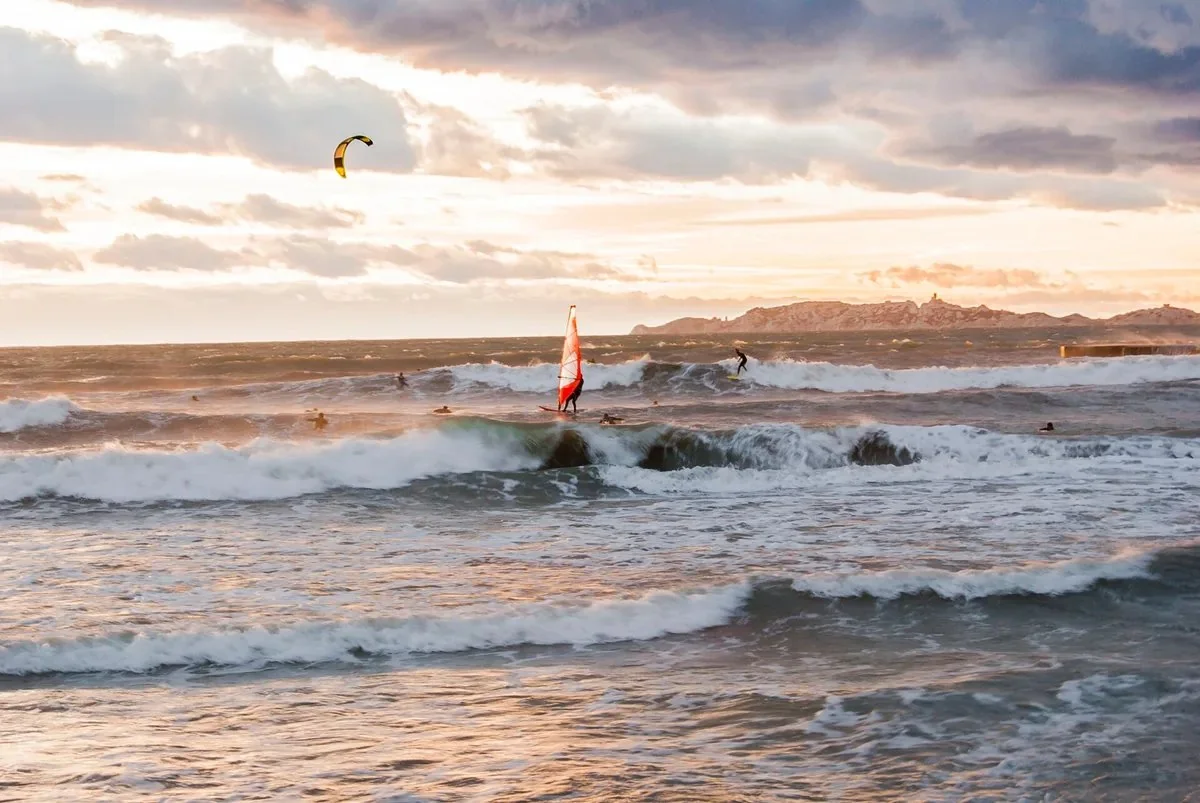
The Plage de la Pointe Rouge is the water sports beach of Marseille: wide, open, with a sailing school, paddle, kayaking and diving clubs, plus a maritime shuttle that links the Vieux Port in about 20 min. Arriving at the beach by boat remains the finest way to start the day, and the crossing is part of the trip. The landing stage on quai des Belges is 600 metres from Hôtel Amista, a 7 min walk, and reception will note the day's timetable and the address of the pier for you.
Further south, La Madrague de Montredon marks the passage to another Marseille. This small fishing village, served by bus 19, keeps a modest beach and a slow pace. La Madrague works above all as the starting point for each cove that follows: La Maronaise, Les Croisettes, then Callelongue at the end of the road, and Les Goudes, the last village before the national park. Parking at La Madrague is almost impossible in summer, which is another good reason to take the bus. La Madrague itself is no seaside resort: one restaurant, a bar, a few boats, and that is the charm. The restaurant terrace is a nice spot for a long lunch after a hike. Travel blogs often skip it, which keeps this part of the coast pleasantly quiet.
Beyond La Madrague, forget groomed sand: here you find pebbles, flat rocks, tide pools and deep, transparent water. Cap Croisette closes the coast facing Île Maïre. These beaches call for proper water shoes and a short hike, since every cove is reached on a rocky path, but they offer landscapes that take your breath away at the end of the bus line, on the 19 then the 20. Snorkelling around the rocky points of La Madrague is excellent, with a tide pool or two for children between the flat rocks, each pool warm enough for a long paddle, and the swimming conditions stay calm when the mistral blows from the north. Pack water shoes, a hat and a picnic: there is no shop beyond La Madrague, only one bar at Callelongue.
The calanques, the most beautiful beaches in Marseille, naturally
You cannot talk about Marseille beaches without the calanques. The Calanques National Park starts at the southern edge of the city and rolls its white cliffs all the way to Cassis. The Calanque de Sormiou and the Calanque de Morgiou each have a small sandy beach and a handful of cabanons, accessed on foot in a 30 to 45 minute hike from the car parks, since driving in is restricted in summer.
The Calanque de Sugiton, the most famous calanque of the Marseille side, is reached from the Luminy campus. Its numbers are capped in high season, with a compulsory online booking and a daily quota, introduced to protect the site. Marseilleveyre and Podestat, more confidential, require a real hike but repay the effort with turquoise water and remarkable snorkelling. Hiking down is the only way in, and the hike back is the hard part, so leave early, take two litres of water per person, and discover the massif before the heat.
On the Cassis side, the Calanque de Port-Pin and the Calanque d'En-Vau are among the most famous and most photographed in France. From Marseille, Cassis is a 20 min train ride from Saint-Charles station, then a short bus to the centre. It makes an easy day trip, and an attractive alternative when the Marseille calanques are saturated. Allow 25 min of walking down to the cove, and the same back up, because every calanque is earned on the way home. The hike is the price of an empty beach, and most people find it attractive enough to do it twice. Boat tours in Marseille leave 600 metres from Hôtel Amista and remain the most comfortable way to discover the calanques beaches, with our partners and their calanques boat tour.
The Frioul islands, l'Estaque and the Côte Bleue
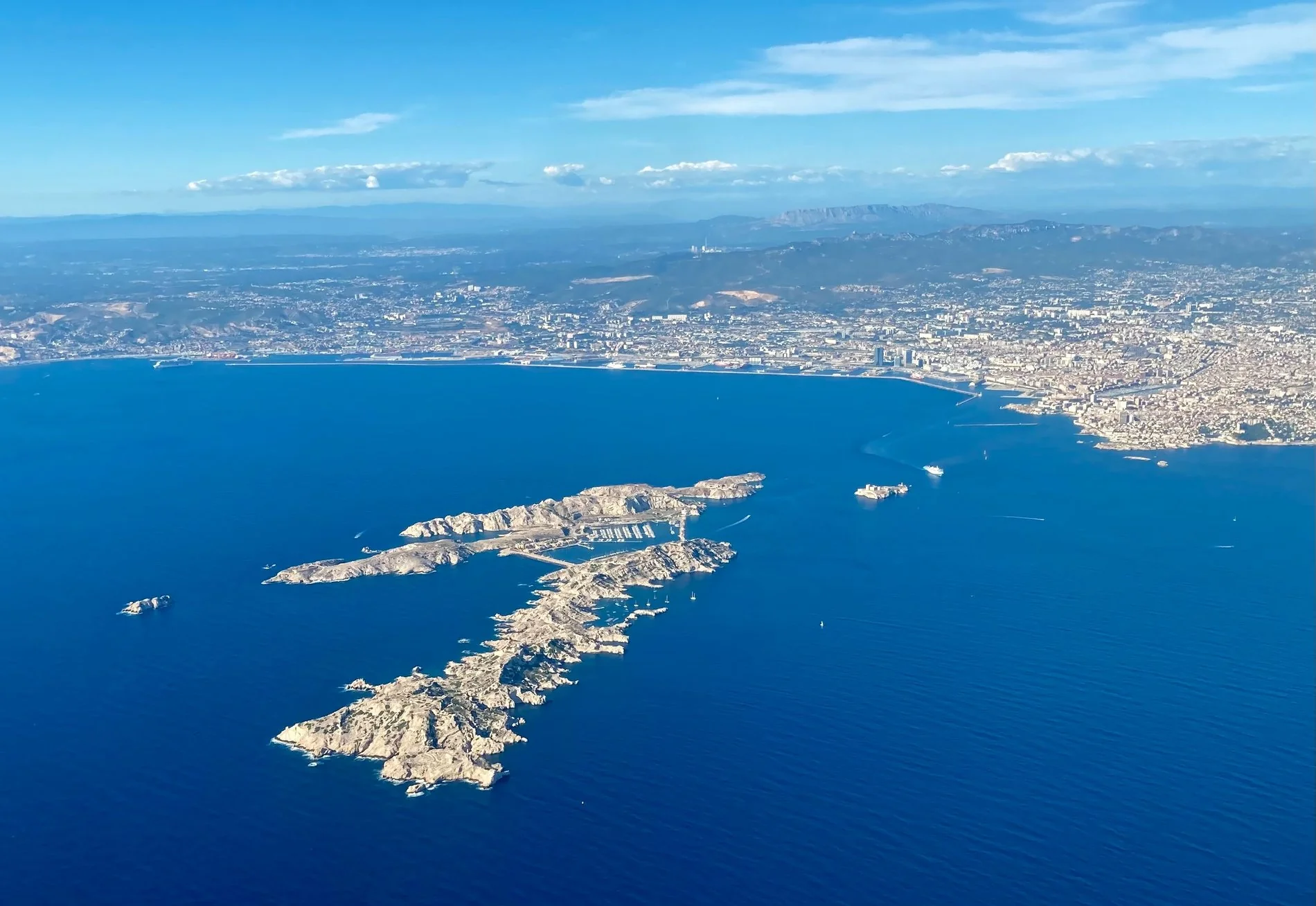
The Frioul archipelago is reached from quai des Belges, a short crossing away. The islands of Ratonneau and Pomègues shelter the Plage Saint-Estève, the only real beach of the archipelago, and a series of tiny coves such as the Calanque de Morgiret. The water is remarkably clear, and you quickly understand why Marseillais spend their Sundays here. Ratonneau is the island with the beach and the small harbour, Pomègues the island for walking, and the ferry makes island hopping simple. A snack bar operates near the port in season, and the island has no car at all, which makes it a nice break from the city. Quai des Belges, where the boat leaves, is a 10 min walk from Hôtel Amista.
To the north, l'Estaque opens another coast, more popular and less touristy. The Plage de Corbière gathers four managed coves, Sablettes, Fortin, Lave and Phocéens, with toilets, lifeguard posts and lawns. It is 20 min away by train, the simplest option when the south is saturated. The village is accessible by train from Saint-Charles, by maritime shuttle or by bus, and its morning markets are worth as much as the swim. The old town of l'Estaque is famous for its chichis and panisses, sold in the same shop since forever, and the fish restaurants on the quay are a pretty way to end the afternoon. Painters made this town famous long before the beaches did.
Further out, the Côte Bleue strings together Niolon, Carry-le-Rouet and Sausset-les-Pins, the best known beaches near Marseille on the western side, in Provence. Eastwards, the same railway continues towards Cassis, Bandol and the French Riviera. The railway that runs along this blue coast is one of the prettiest in France: every station serves a cove, and the ride takes less than an hour. The Côte Bleue marine park even maintains a marked underwater trail for snorkelling with mask and fins.
How to get to the beach in Marseille without a car
Public transportation covers most of the coast, which is good news when you travel without a car. From Hôtel Amista, everything starts on foot: Noailles metro station, the bus 83 stop and the landing stage are all within 700 metres.
The metro line 2 runs down to Rond-Point du Prado, the gateway to the Prado beaches. Bus 83 links the quays to the Catalans, the Corniche, the Prophète and the Prado, with a sea view for the whole ride. Lines 19 and 20 continue towards La Madrague de Montredon, Callelongue and Les Goudes. The maritime shuttle leaves the Vieux Port for Pointe Rouge and l'Estaque, turning a simple transfer into a mini cruise. The train finally opens the Côte Bleue, Cassis and even Aix-en-Provence in very little time from Saint-Charles station, often faster than the same journey by car, where a 20 minute drive easily becomes an hour in August.
For short distances, bike rentals work well as far as the Corniche, where the cycle path runs without interruption. Download a map of the network before you go, or ask reception for the paper map; a quick search on the RTM site gives the live timetable, hour by hour, including the last boat at night. Travellers arriving from Paris by train, or from Marseille Provence airport by shuttle, can drop their bags and be in the water an hour later. For a two-day trip, that detail changes the whole vacation and turns a stopover into a real seaside break.
Family beaches, season and practical tips
With children, the Prado beaches, the Prophète and Pointe Rouge remain the safe choices: gentle entry into the water, lifeguard posts monitored in summer, toilets, showers, shade nearby and activities within reach. These are the best beaches for kids in the city, the most family friendly spots, and the easiest places to spend a whole day. Shade, toilets, a lifeguard post and a snack bar are never far, and an attractive playground is rarely more than a minute away. Not every beach is suitable for children, and the calanques and the southern coves suit families with teenagers better, given the stairs, the pebbles and the depth.
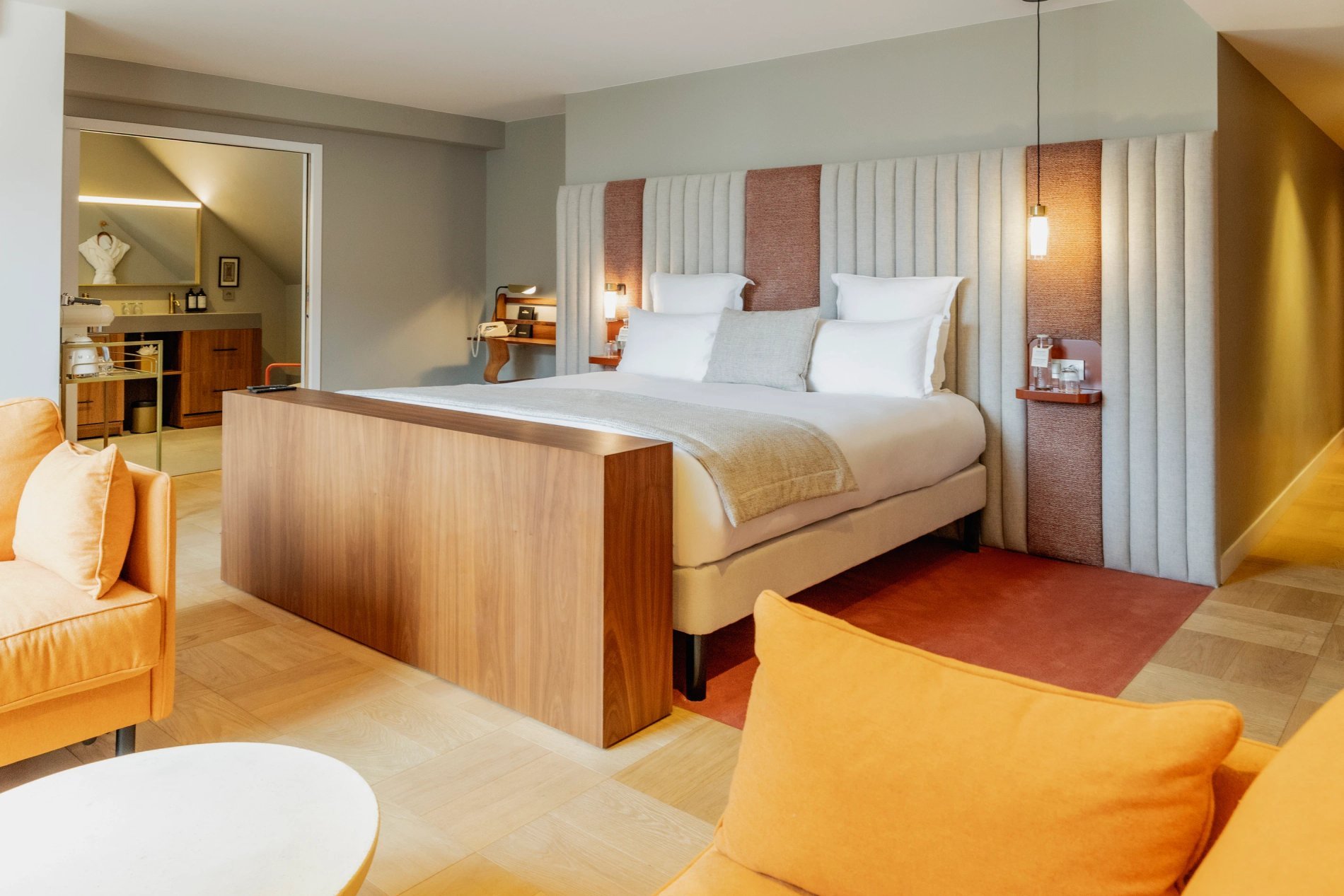
For accommodation, Hôtel Amista was designed with those days in mind. The family rooms are connecting and sleep up to six, with two bathrooms, a balcony and the option of extra sofa beds. The attic Junior Suite even has a kitchenette, useful for bottles and snacks. Cot on request, pets welcome, luggage storage for beach gear: the amenities that make a family stay simple are all there.
A few practical tips for visiting, and some useful info. The monitored swimming season runs from June to September, with lifeguard hours posted at the entrance of each beach. The mistral cools the water very fast and exposes some beaches, so check the marine forecast and the swimming conditions before you leave. Blogs and traveller reviews agree on one point: arrive before 11 in July and August, especially in the calanques, where quotas and fire risk can close access for the day. Read the signs at the car parks, note the last bus back, and remember that crowds are strongly reduced from mid-September, when the water is at its warmest and prices are reduced too. For more practical info on the season, our list of the best swimming spots month by month is simple: city beaches in spring, calanques in June, islands in September. Explore one area per day rather than three, and you will discover far more. The most attractive option in August is simple: take the first boat out and discover an island before the crowds.
Dinner or a drink after the beach
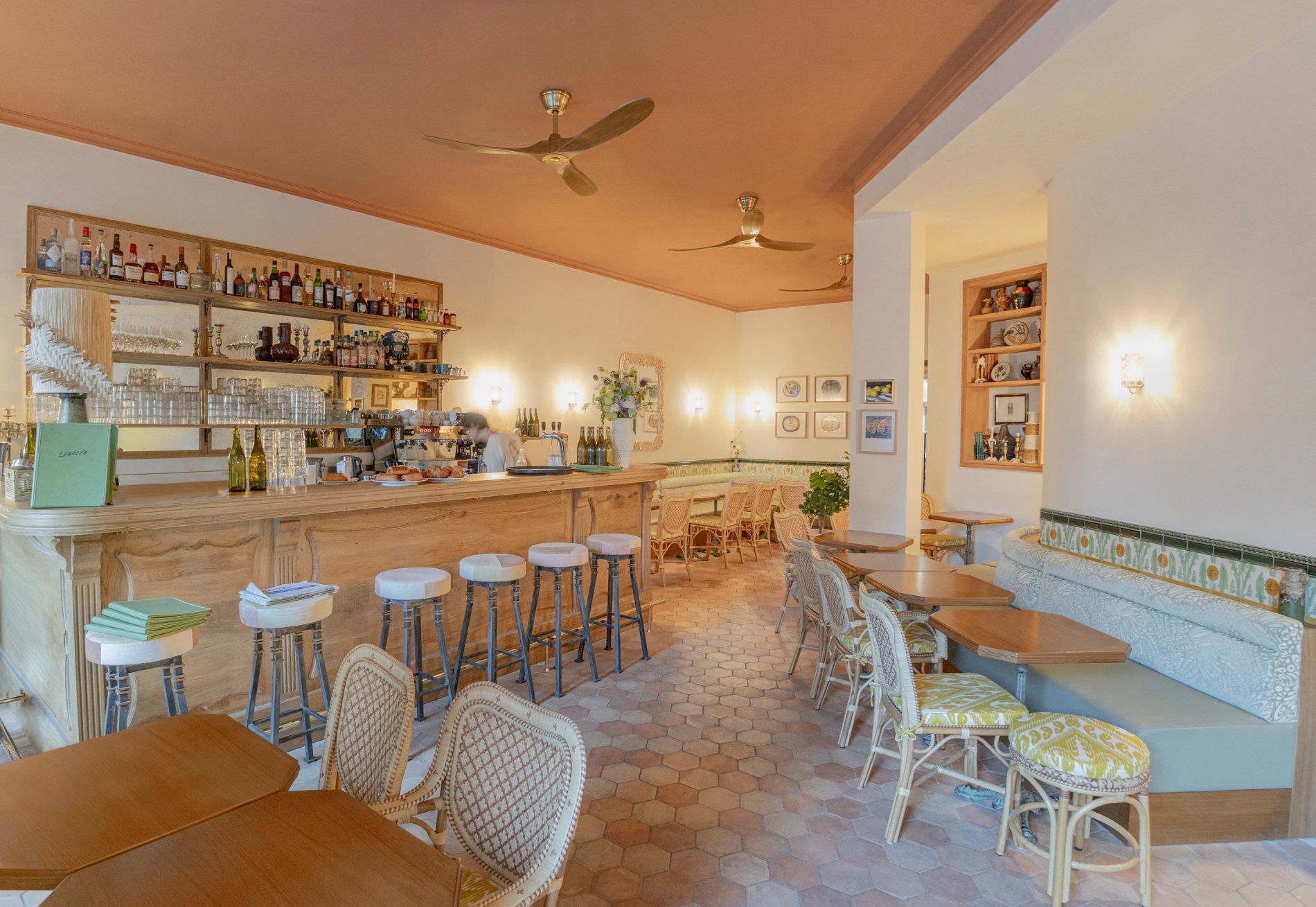
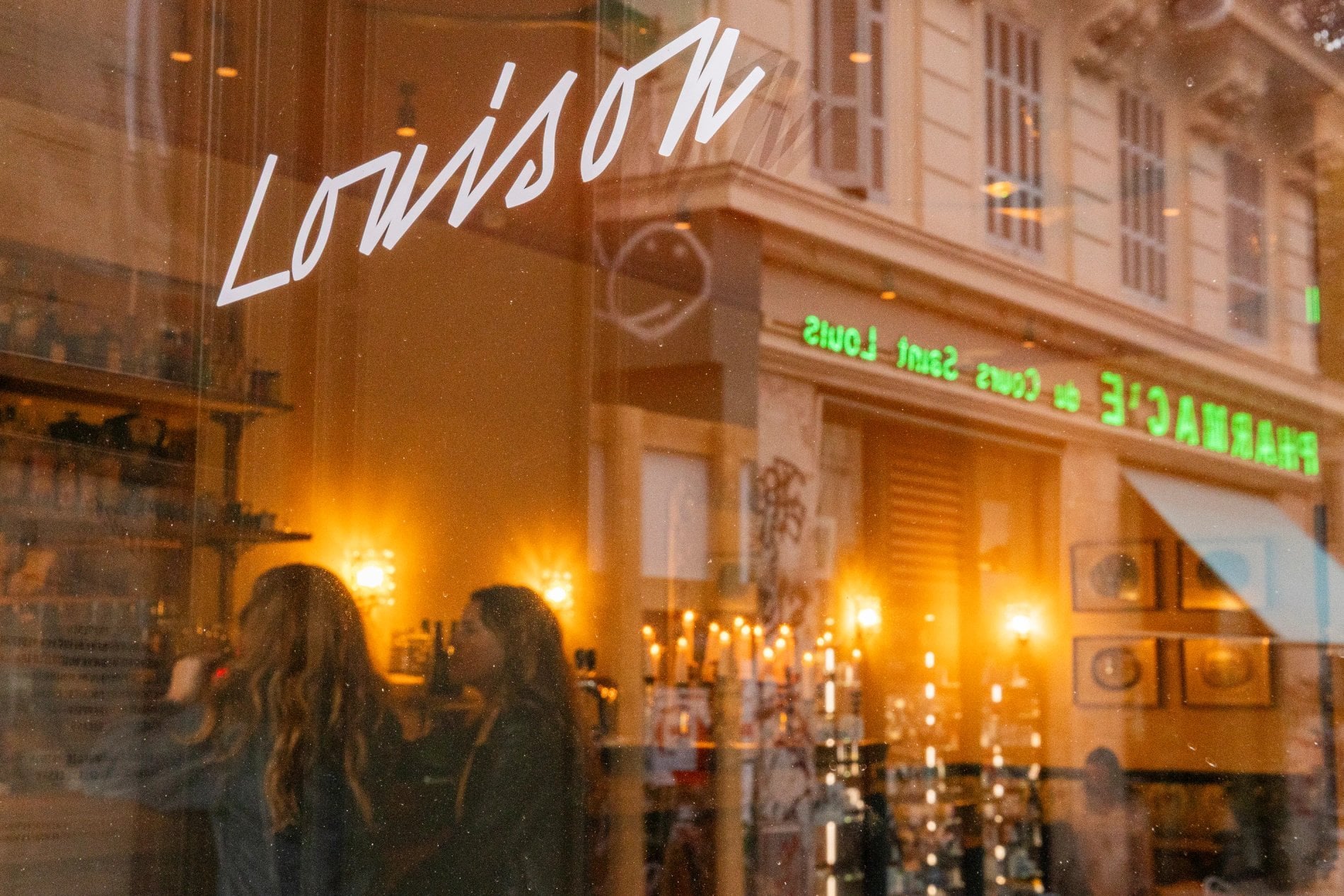
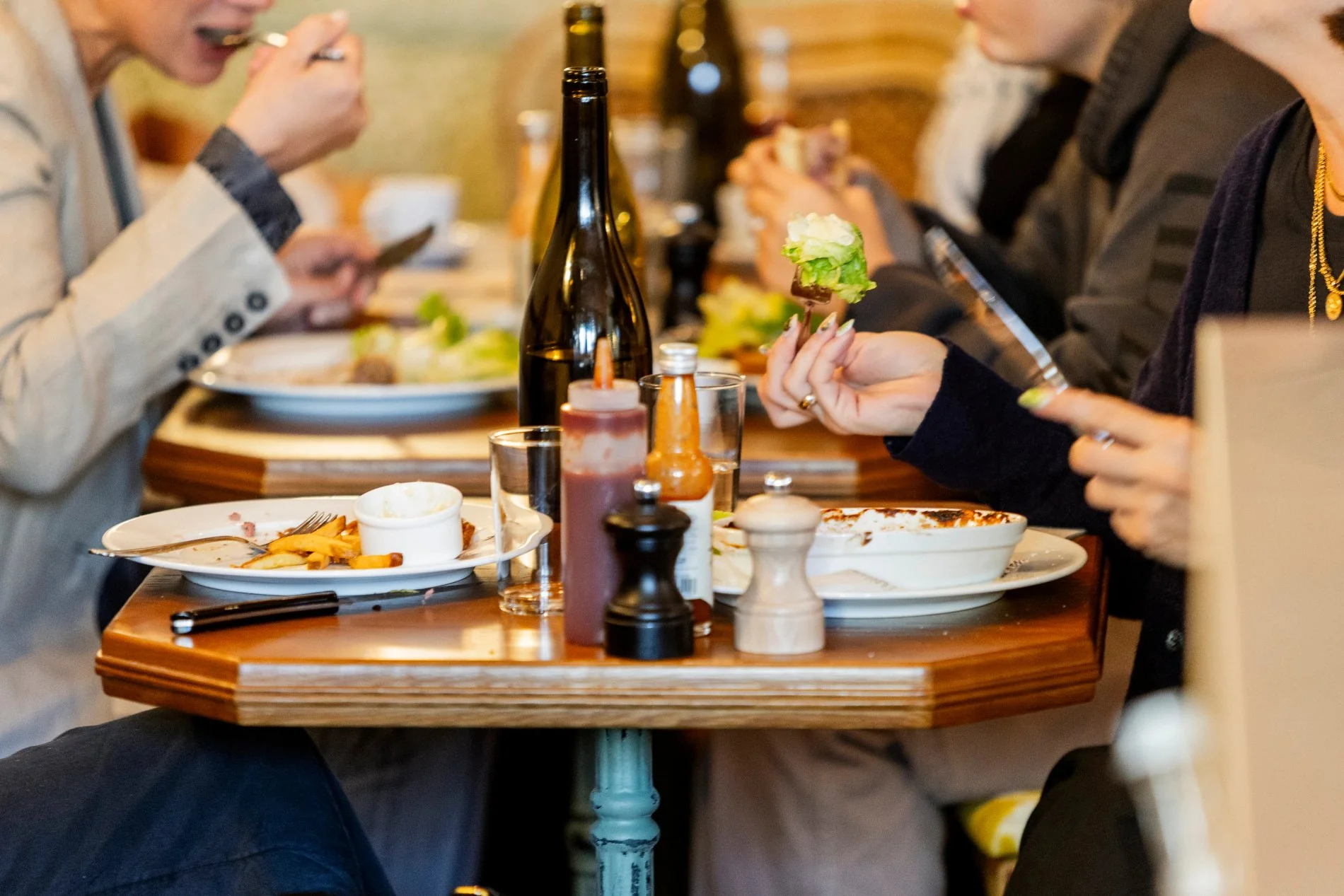
The return from the beach has its ritual: a shower, a drink, and something to share before going out again. On the ground floor of Hôtel Amista, the restaurant Louison serves Mediterranean market cooking from morning to evening, prepared on site. It is one of the few restaurants in the city centre serving all day, a restaurant and a bar at once, open to everyone and not only to hotel guests, with a weekend brunch worth the detour after a morning by the sea.
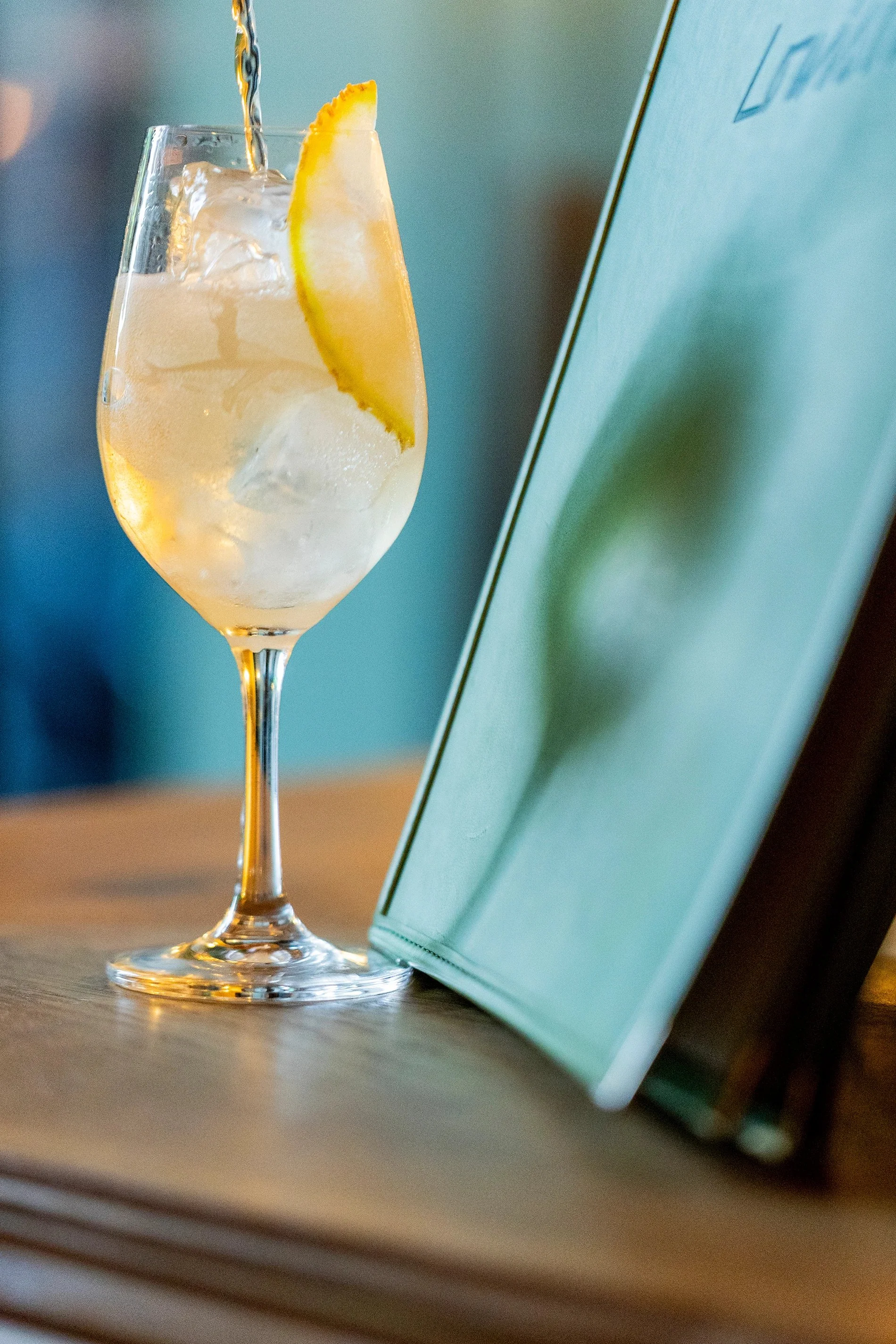
In the late afternoon, the bar brings out the sharing plates: cracked olives from Maussane, house panisses with aïoli, houmous with parsley, tapenade, focaccia with stracciatella, serrano ham. The cocktails are made in house, the cellar favours Provence wines by the glass, and filtered sparkling water is served as much as you like, which is welcome after a day in the sun. The terrace is the most requested spot from the first warm days, and the table can be booked independently of a room. For a special occasion, the whole restaurant can be privatised, and the bar stays open late on summer nights.
Where to stay to enjoy the Marseille beaches
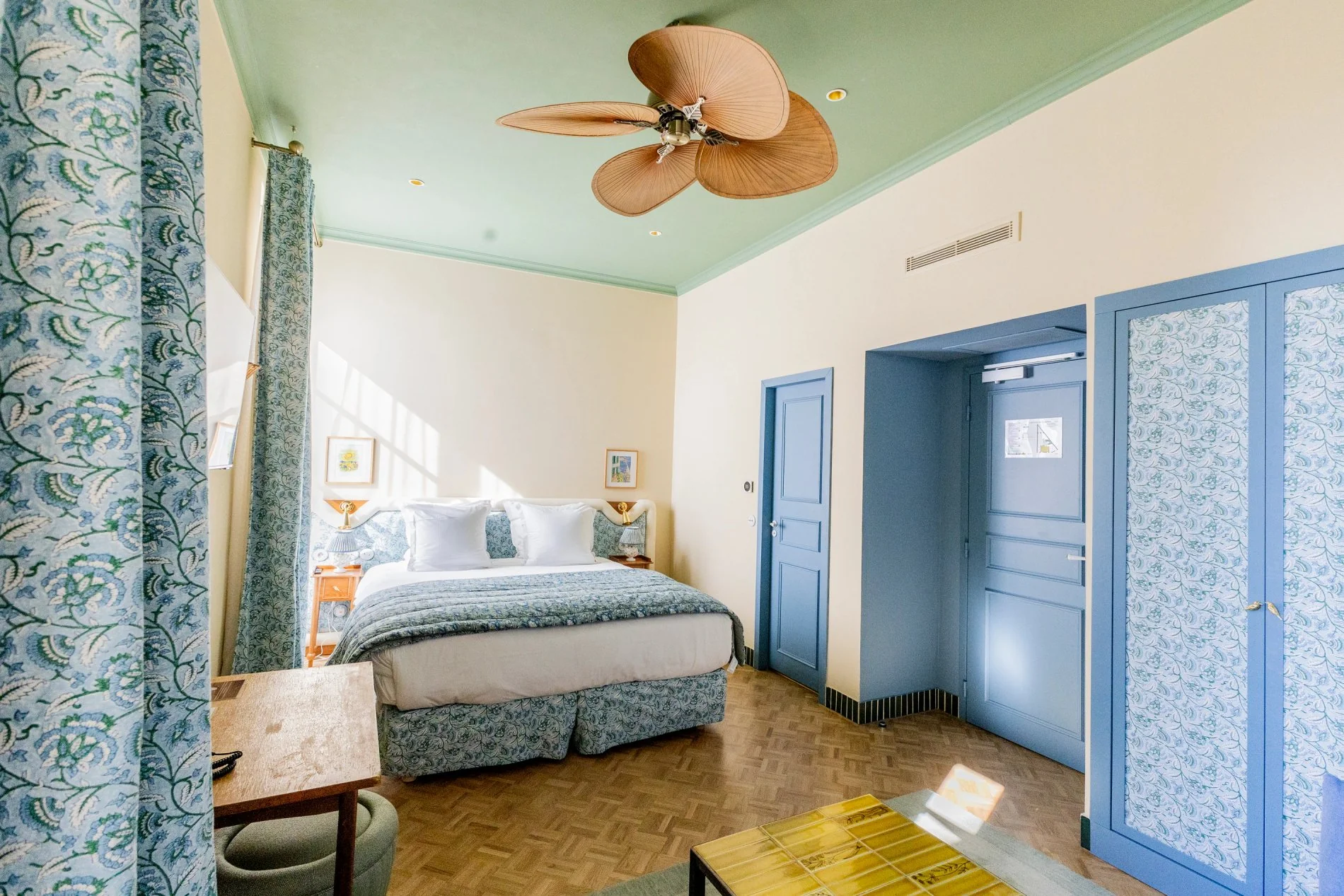
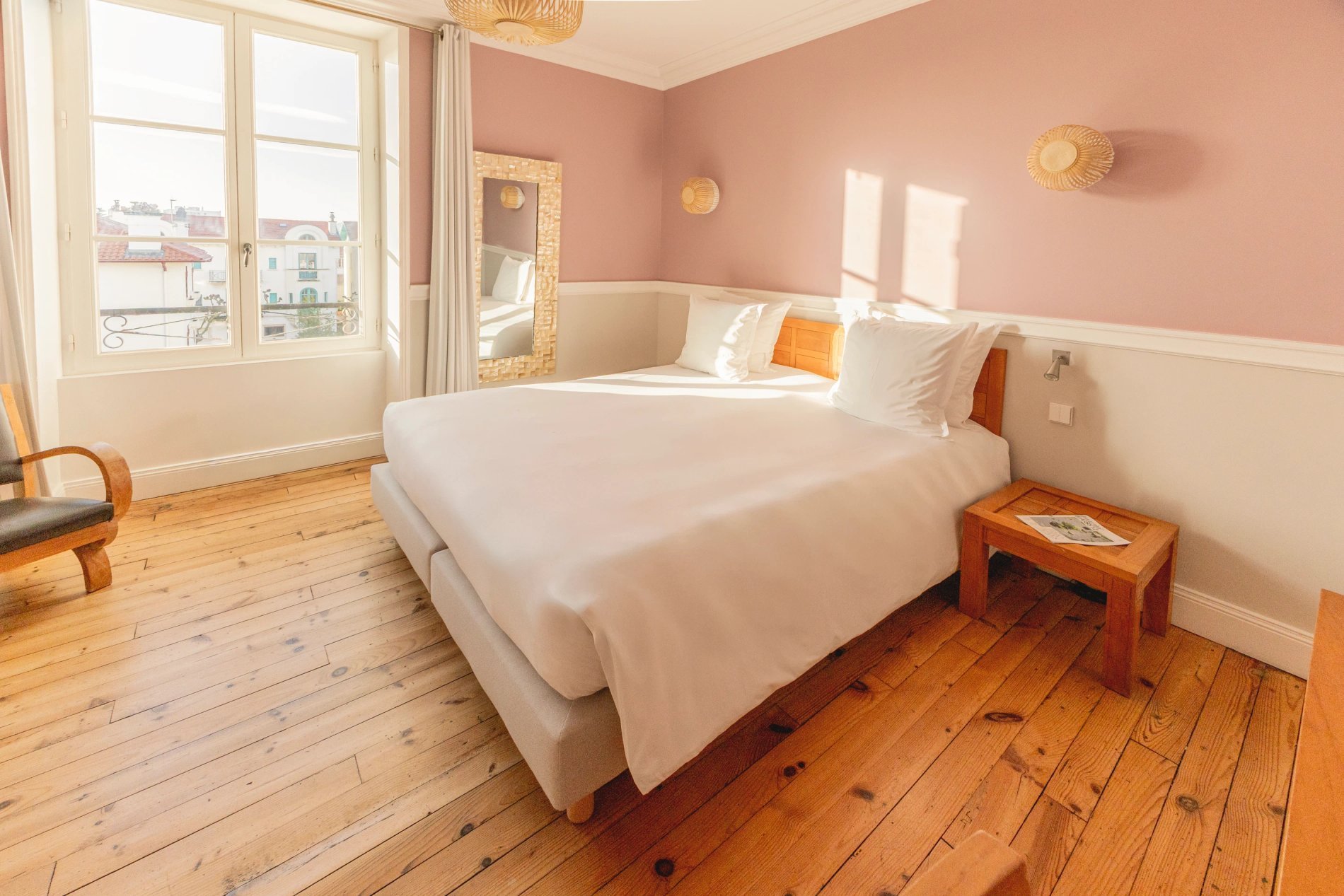
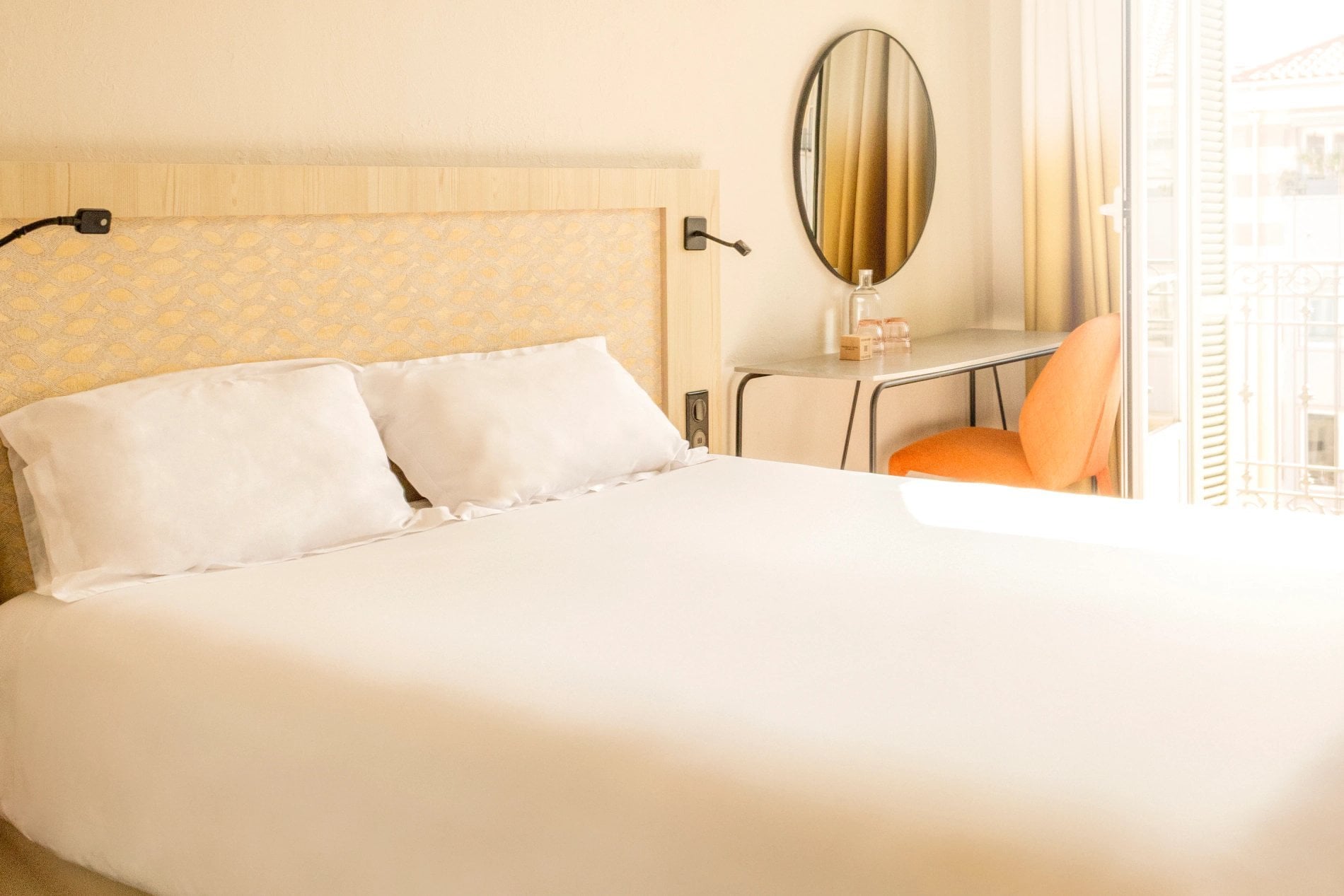
Hôtel Amista occupies a fully renovated Provençal house in the 1st arrondissement, in the Noailles district, a few steps from the shopping streets and the markets. Pale wood, soft colours, vintage furniture: the interiors signed by Dorothée Delaye make it a genuine charming hotel, where each room has its own character, far from chain standards. Among the hotels in Marseille city centre, it is one of the quietest addresses at this distance from the harbour, and privacy in your room is taken seriously, with double glazing on the street side. It is an independent, family run hotel rather than a chain property, with the independent spirit that goes with it: the bar opens onto the street, the breakfast is a nice surprise, and reception stays available 24 hours for late returns from the beach. The address is 2 rue des Récolettes, a 10 minute walk from the Vieux Port.
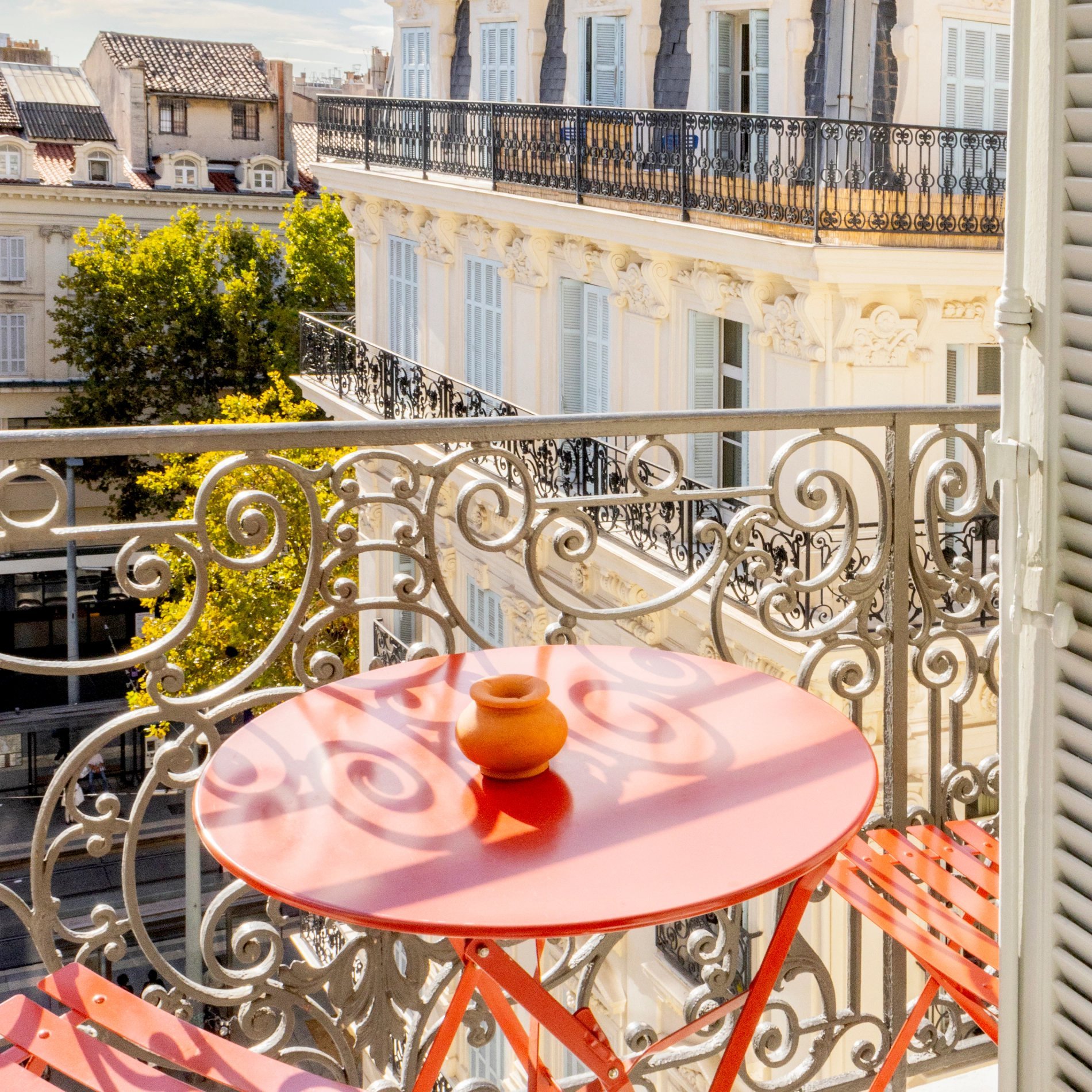
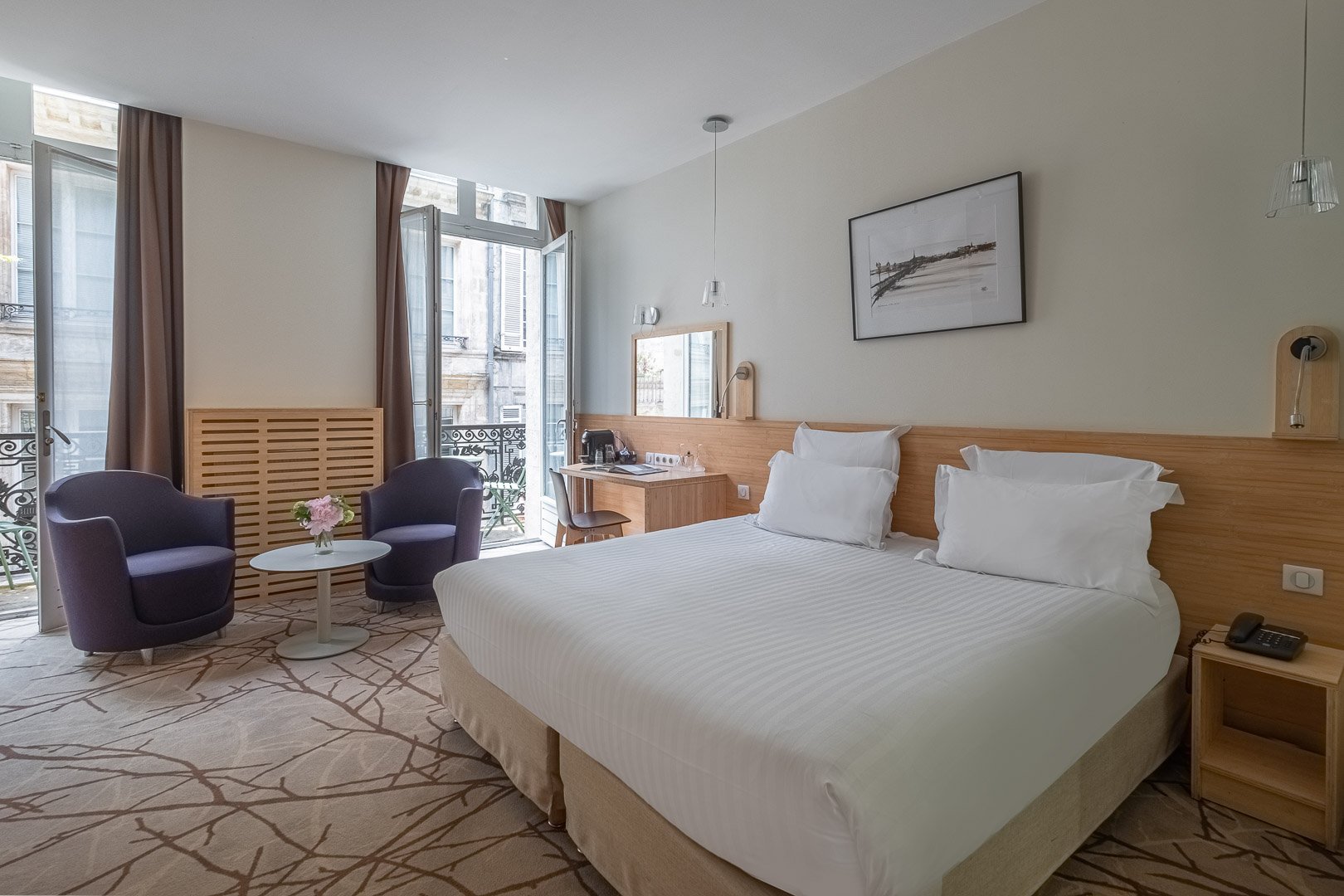
The house counts 24 rooms and suites, from the cosy categories to the large connecting rooms for six, with balconies, kitchenettes and Palace bedding depending on the category. Enough to host a couple as easily as a tribe coming back from the sea, damp towels included. If you would rather sleep closer to the water, our dedicated page explains how to combine seafront and city centre. Rooms with a balcony are the nicest in summer, and the location means you can walk everywhere: shopping streets, shopping arcades, local markets, French bistros and the port are all within a few minutes. Ask at the desk for our list of quiet spots, the hiking routes that stay in the shade, the snorkelling spots and the best time to go.
Your Marseille summer starts here
A beach in the morning, a boat to the calanques in the afternoon, a drink on the terrace on the way back: in Marseille all of that fits into the same day, as long as you sleep in the right place. From Hôtel Amista, the metro, the coastal bus and the landing stage are all within 700 metres, so you can go back and change between two swims without thinking about it.
Rooms go quickly as soon as the weather turns, especially the large connecting rooms and those with a balcony. Book direct on our official website for the best online rate, with up to 12% off, and our team will have your beach itinerary ready before you arrive.
Frequently asked questions about the beaches in Marseille
It depends on what you want. For facilities and swimming, the Prado beaches. For turquoise water and scenery, the famous Calanque de Sormiou or Plage Saint-Estève on Frioul. For proximity to the city centre, the Catalan beach, 1.5 km on foot from the quays.
Yes, easily. Cassis is a 20 min train ride from Saint-Charles station, then a short bus to the centre. La Grande Mer, Le Bestouan, Port-Pin and En-Vau all fit into one day, and the return in the late afternoon is straightforward.
The Prophète, the Prado beaches and Pointe Rouge, for their gentle slope, their monitored lifeguard posts, their facilities and their playgrounds. The pebble coves of the south and the calanques involve more walking and deeper water.
On foot from Luminy for Sugiton, from the Sormiou and Morgiou car parks for those two, or by boat tour from the port, the simplest option with children. In summer, check the quotas, the online booking and the fire risk the evening before.
Yes. The Prado beaches, Pointe Rouge, the Catalans and Plage Saint-Estève on Frioul all offer fine sand. Elsewhere, especially along the Corniche and towards Les Goudes, expect pebbles, rocks and tiny sheltered coves rather than a sandy beach.
Almost all of them. Bus 83 serves the Catalans, the Corniche, the Prophète and the Prado, metro line 2 runs to Rond-Point, lines 19 and 20 reach La Madrague de Montredon and Les Goudes, and the maritime shuttle links the quays to Pointe Rouge.