Things to Do in Marseille with the Family: A Local Guide
Looking for the top things to do in Marseille with the family without turning your holiday into a route march? The second largest city in France packs a national park, a fishing harbor, kid friendly collections and swimming spots into a few square kilometers. Between the Vieux-Port, Le Panier, the Mucem, the basilica and the Frioul islands, you discover a different side of the city each morning, mixing history, nature and fun. This travel guide lists the best family activities in Marseille and completes our overview of what to do in Marseille, the free spots, the tours worth booking ahead and the practical tips that save time with children. Every address sits minutes from Hôtel Amista, in the heart of the city of Marseille.
The Vieux-Port, where a family visit begins
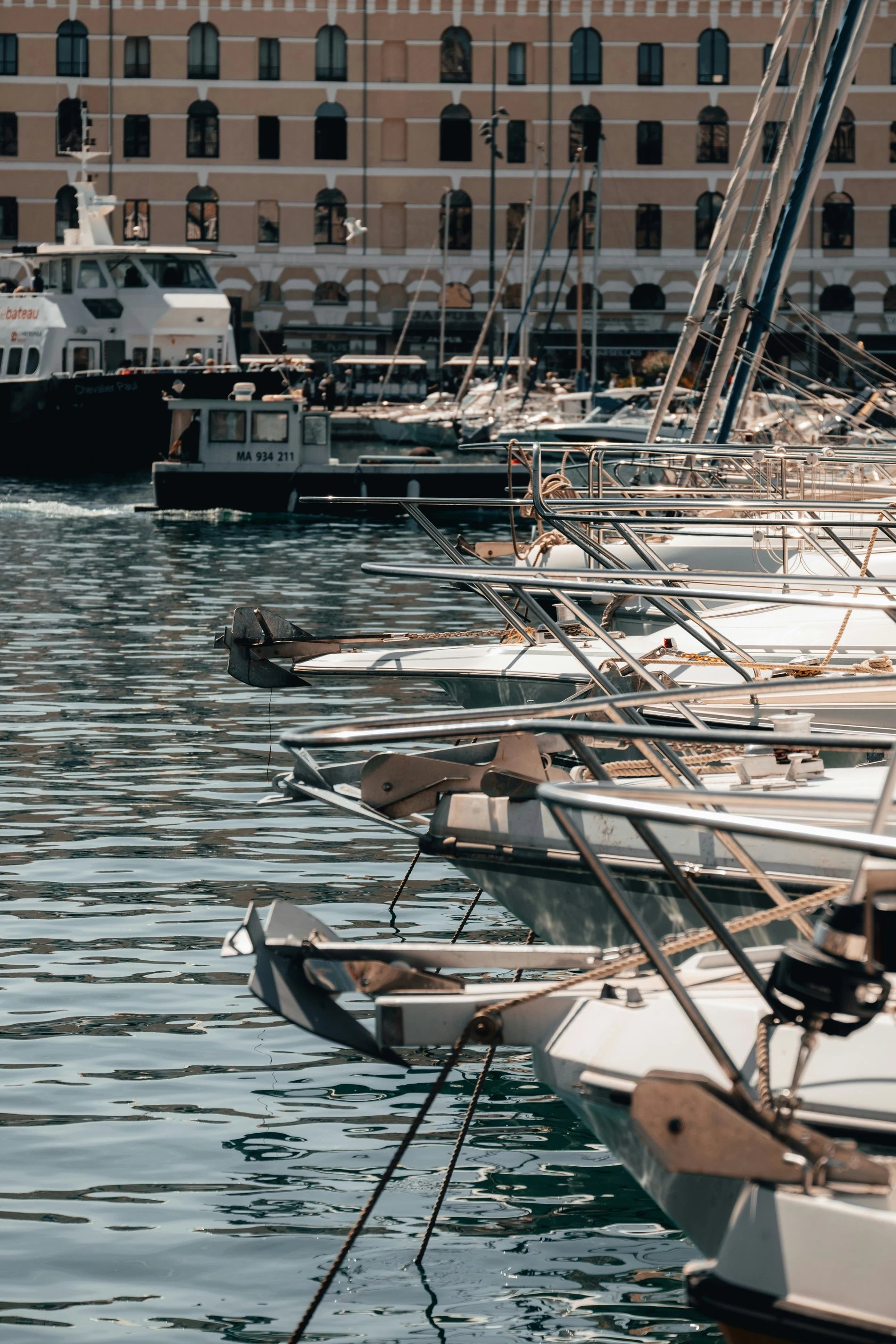
Exploring Marseille with kids almost always starts here. The old port of Marseille has anchored the city for twenty-six centuries and remains its liveliest corner: wooden pointus along the quays, cafes facing the water, ferries setting off across the bay, narrow streets climbing just behind. Children spot the masts, the seagulls and the ice cream stands long before you do.
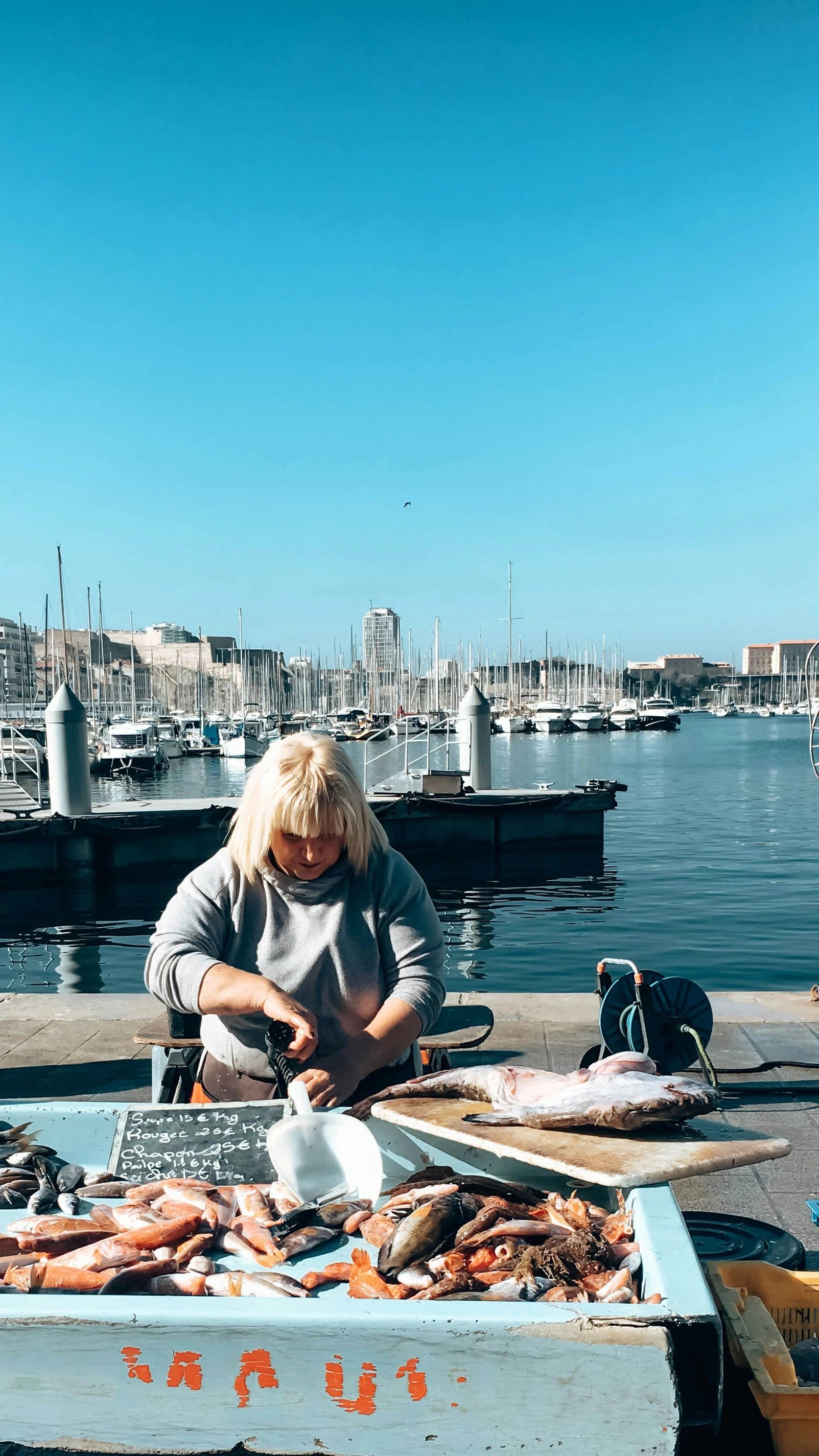
Come to the Quai des Belges early. Fishermen sell the morning catch straight from the boat, and the smell of salt, the voices of the fishwives and the scorpion fish destined for bouillabaisse teach more about the history of Marseille than most guided tours. A few steps away, the Ombrière designed by Norman Foster reflects passers-by on its mirrored ceiling. Plan five minutes, your children will stay twenty and take fifty photos.
Do not miss the ferry boat, the small electric shuttle crossing between the two banks. Marcel Pagnol made it famous, and it remains the shortest memorable experience of the trip. Then walk up the Canebière towards Noailles, where the spice stalls and street food give a first taste of local food, past the tourist office.
Evenings change the mood: facades light up and the promenade becomes a quiet stroll before dinner near the Vieux-Port. Good news for parents, Hôtel Amista sits a few minutes' walk from these quays.
Boat tours: Château d'If, Frioul and the calanques
No visit to Marseille with children is complete without getting on the water. Shuttles leave the Vieux-Port and reach the Château d'If in twenty minutes, a fortress on a white islet facing the bay. Alexandre Dumas locked Edmond Dantès in it in The Count of Monte Cristo. Tell the escape story before you board, or let older kids read more about him on the crossing.
The same ticket often continues to the Frioul islands, a windswept archipelago where Ratonneau and Pomègues hide shallow coves and easy paths. This short cruise is popular from spring onwards, so bring water, a hat and a picnic: shade and shops are both scarce.
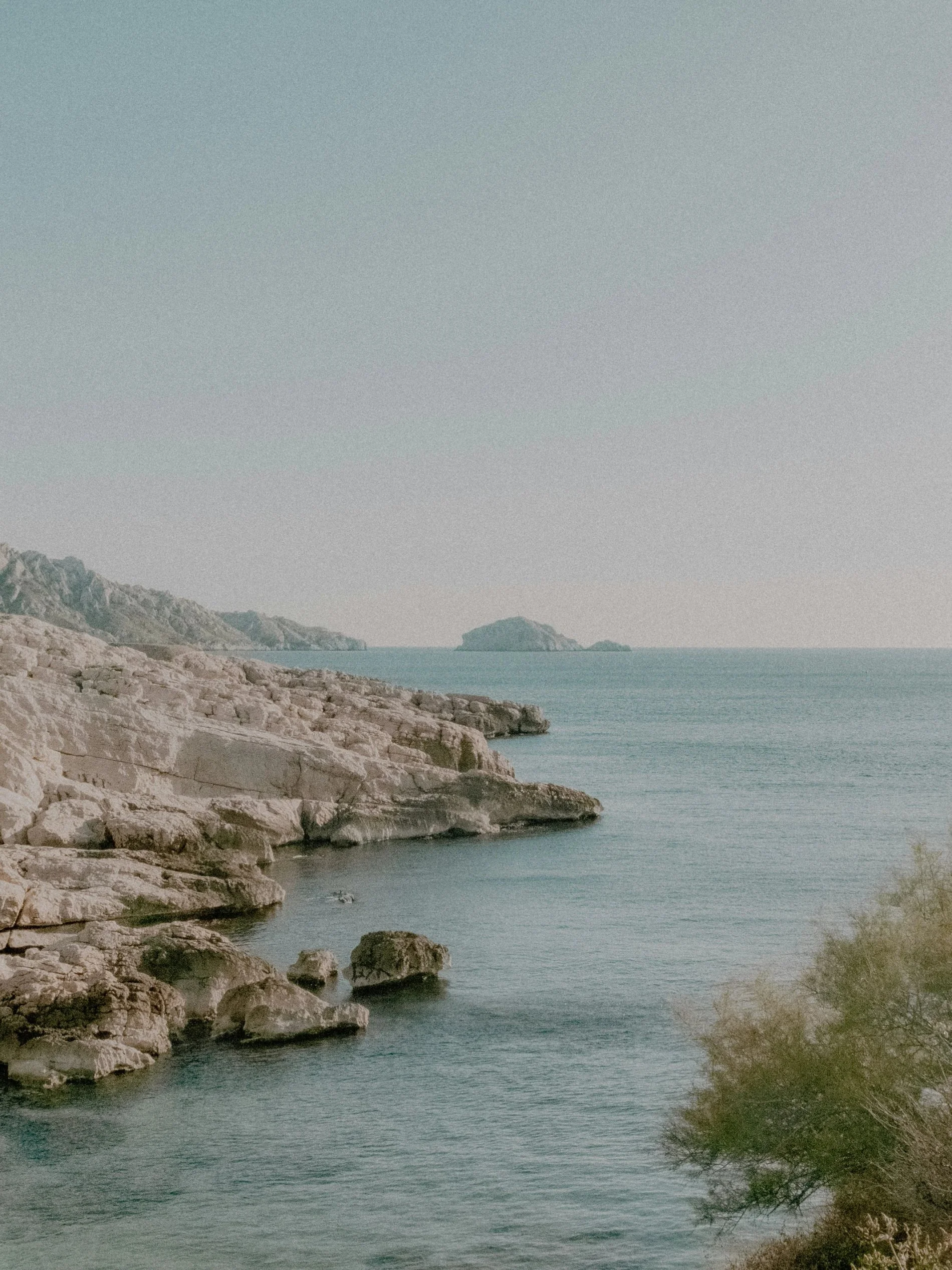
Then comes the Calanques National Park, or Parc National des Calanques, the only periurban one in Europe and the reason so many hiking trails start at the city limits. Our reception works with Eco Calanques, whose hybrid electric calanques cruise leaves from Marseille: quiet and well suited to families, with a preferential rate for our guests. A sunset cruise along the Corniche is another favorite with teenagers.
For a hike, stay realistic with young legs. Sormiou and Callelongue are reachable without technical climbing, while access to Sugiton is regulated in summer and requires an online booking. Fire risk can also close the massif, so check the forecast the evening before. One last tip: leave early, the light is more beautiful and the heat easier.
Museums and cultural spots children actually enjoy
Most local collections have made a real effort for younger audiences. On the first Sunday of the month, municipal museums open free of charge, a gift when the weather in Marseille turns grey.
The Mucem and Fort Saint-Jean
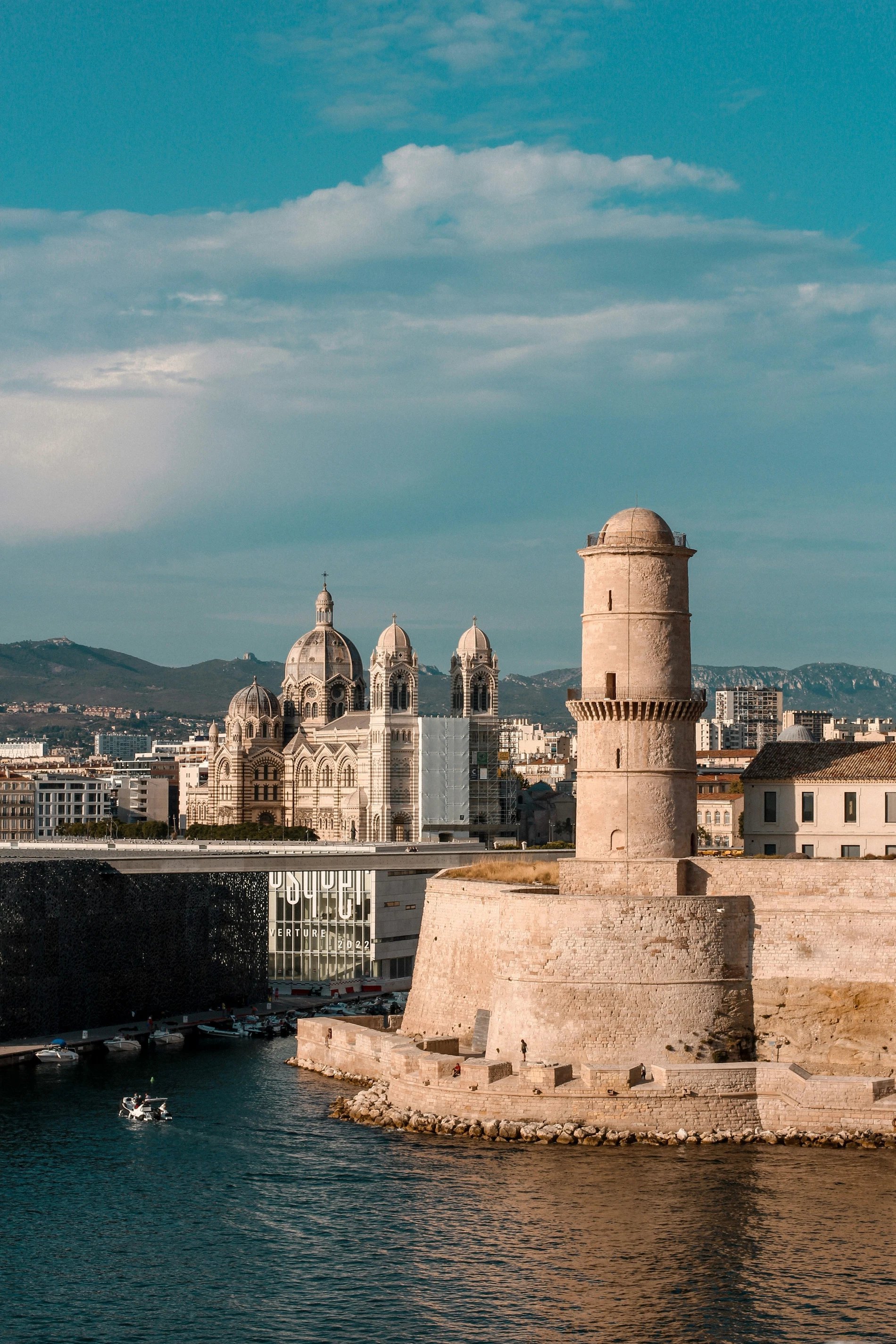
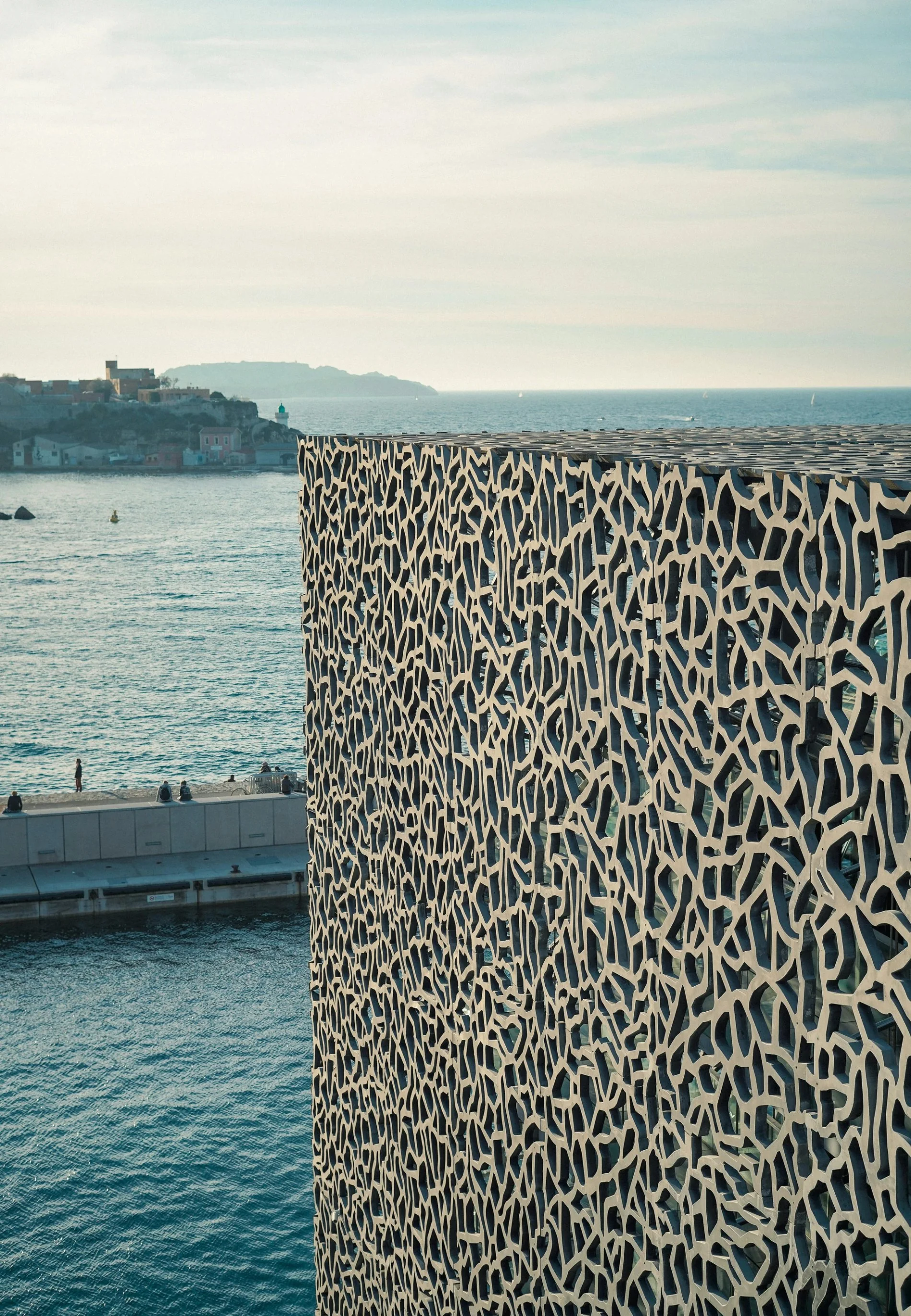
The Mucem is the cultural landmark of the city. Its concrete lacework building, designed by Rudy Ricciotti, connects to Fort Saint-Jean by a footbridge suspended above the sea. Children love crossing it, running through the Mediterranean garden and walking the ramparts above the harbor entrance, where the big cruise ships pass. Exhibitions come with interactive exhibits and family workshops, and you can book tickets at our reception on preferential terms.
Cosquer Méditerranée, a prehistoric cave
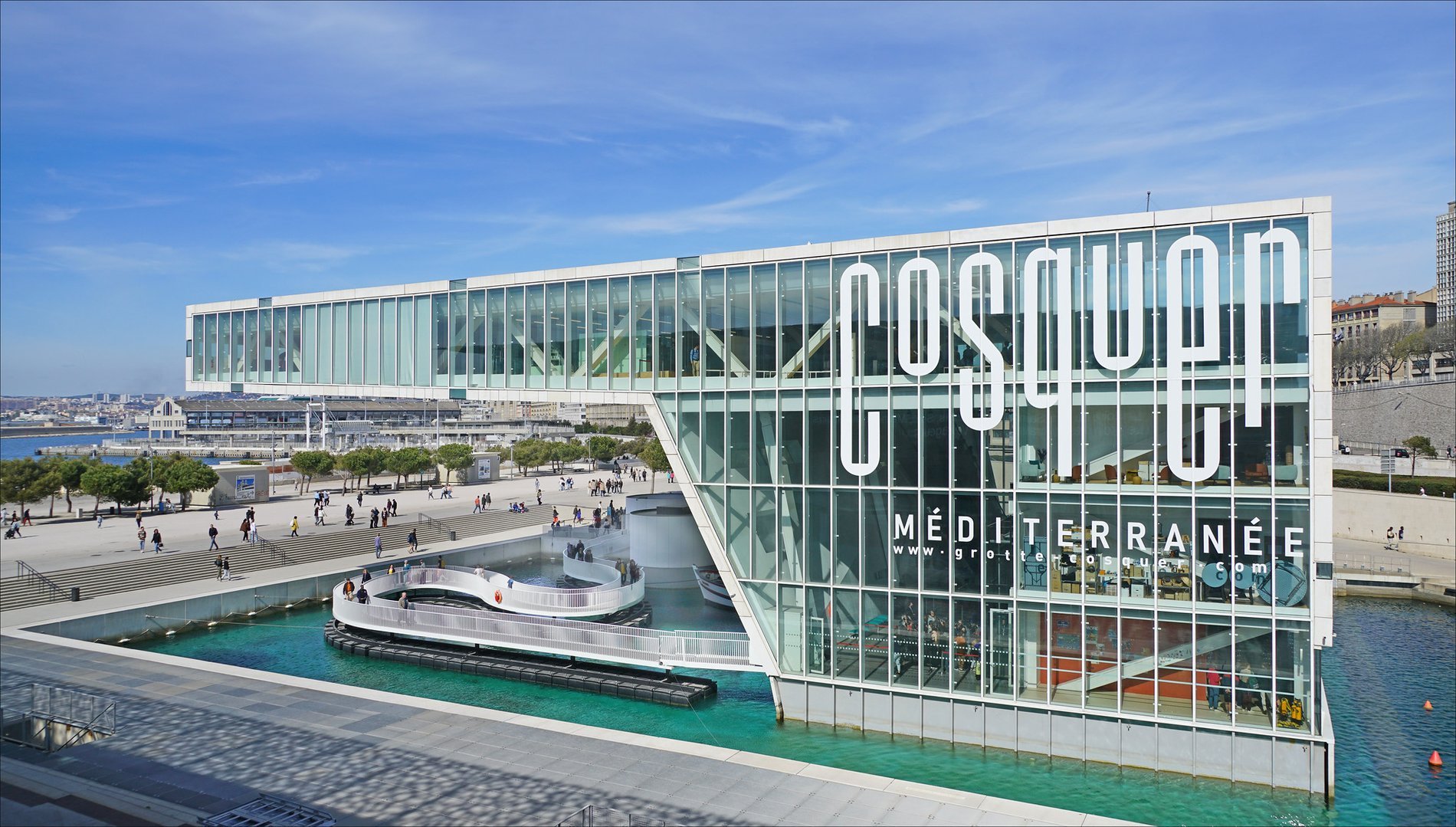
Housed in the Villa Méditerranée, the replica of the Cosquer cave is one of the most striking things to do in Marseille on a hot afternoon. Exploration modules carry visitors along walls painted with horses and hand stencils some 30,000 years ago, in a cavity now flooded by the Mediterranean. Allow an hour for this unique experience, and book ahead in high season.
Palais Longchamp, painting and natural history
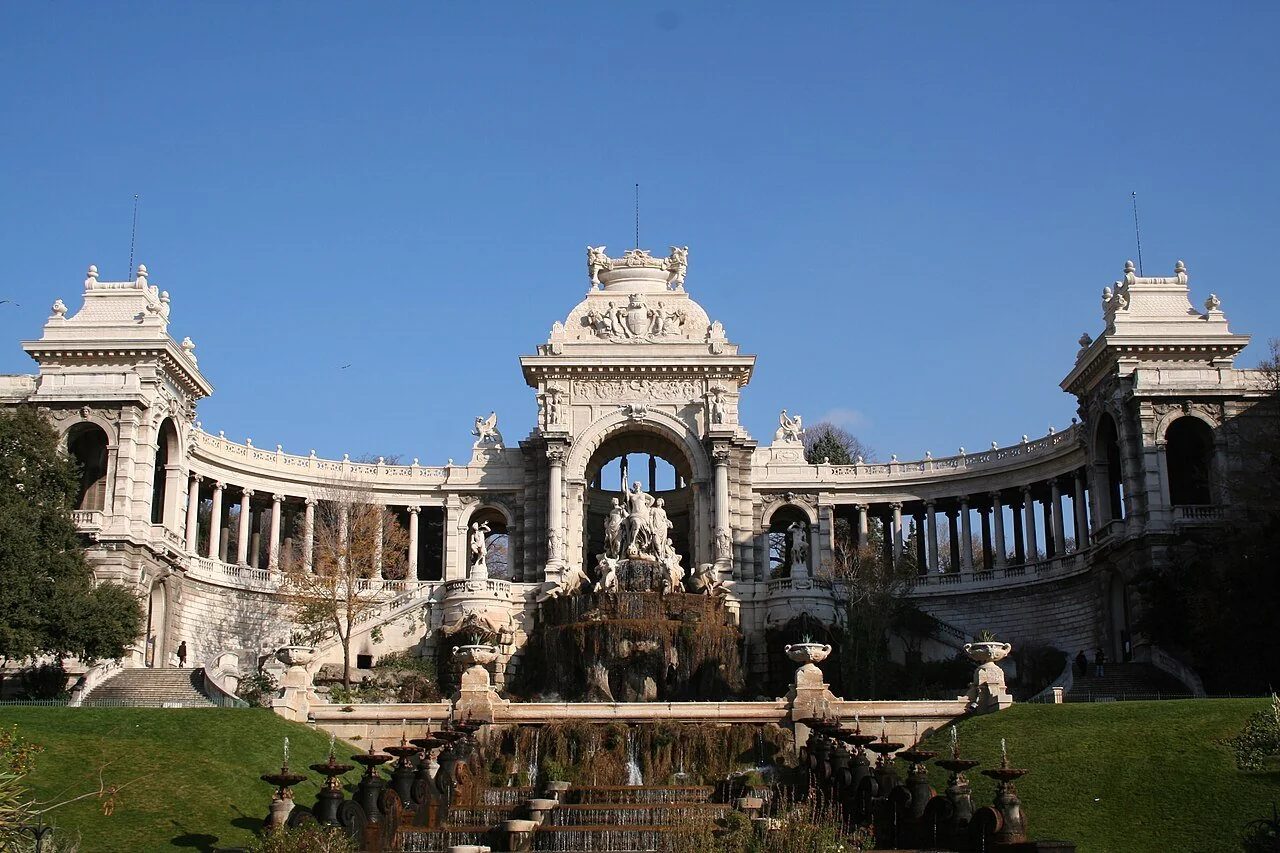
Need shade? This colonnade, built in the 19th century to celebrate the arrival of the Durance canal, houses the city's painting collections and the natural history museum, whose stuffed animals never fail with small children. Nearby, La Friche Belle de Mai adds theater for young audiences, festivals and a rooftop with a playground.
The basilica, Le Panier and Cours Julien on foot
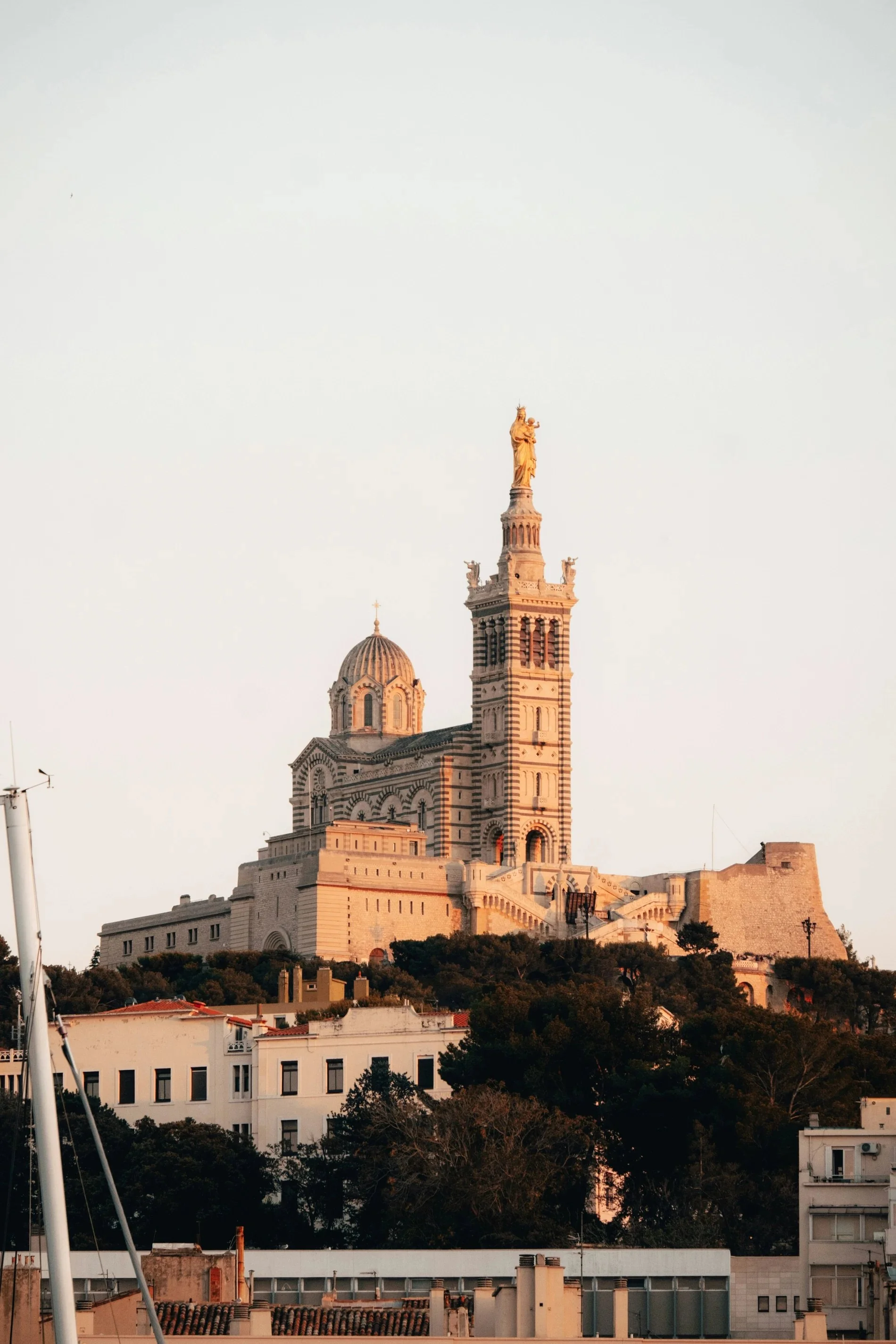
Perched on its limestone hill, Notre-Dame de la Garde watches over the town. La Bonne Mère has to be earned: the walk up is steep, but the little tourist train leaving the Vieux-Port solves the problem with tired children. Inside, look for the ex-votos, model ships and shipwreck paintings left by sailors saved at sea. Entry is free and the view is worth the climb.
Walk down afterwards towards Le Panier, the oldest quarter of Marseille. Its stairs, ochre facades, small art galleries and soap workshops make a perfect car-free stroll, and La Vieille Charité hides a courtyard where children run freely.
Different mood at Cours Julien, the street art capital of the south of France. Painted walls change constantly and the squares fill with markets, record shops and terraces. Give everyone a camera: this is where our guests take their best photos.
Finish at the abbey of Saint-Victor and its fifth-century crypts. Next door, the Four des Navettes has been baking orange blossom biscuits since 1781: warm sugar, a queue on the pavement, an unbroken tradition. This loop starts on foot from the Amista, so an afternoon nap between two outings stays easy to organize.
Swimming, parks and outdoor activities
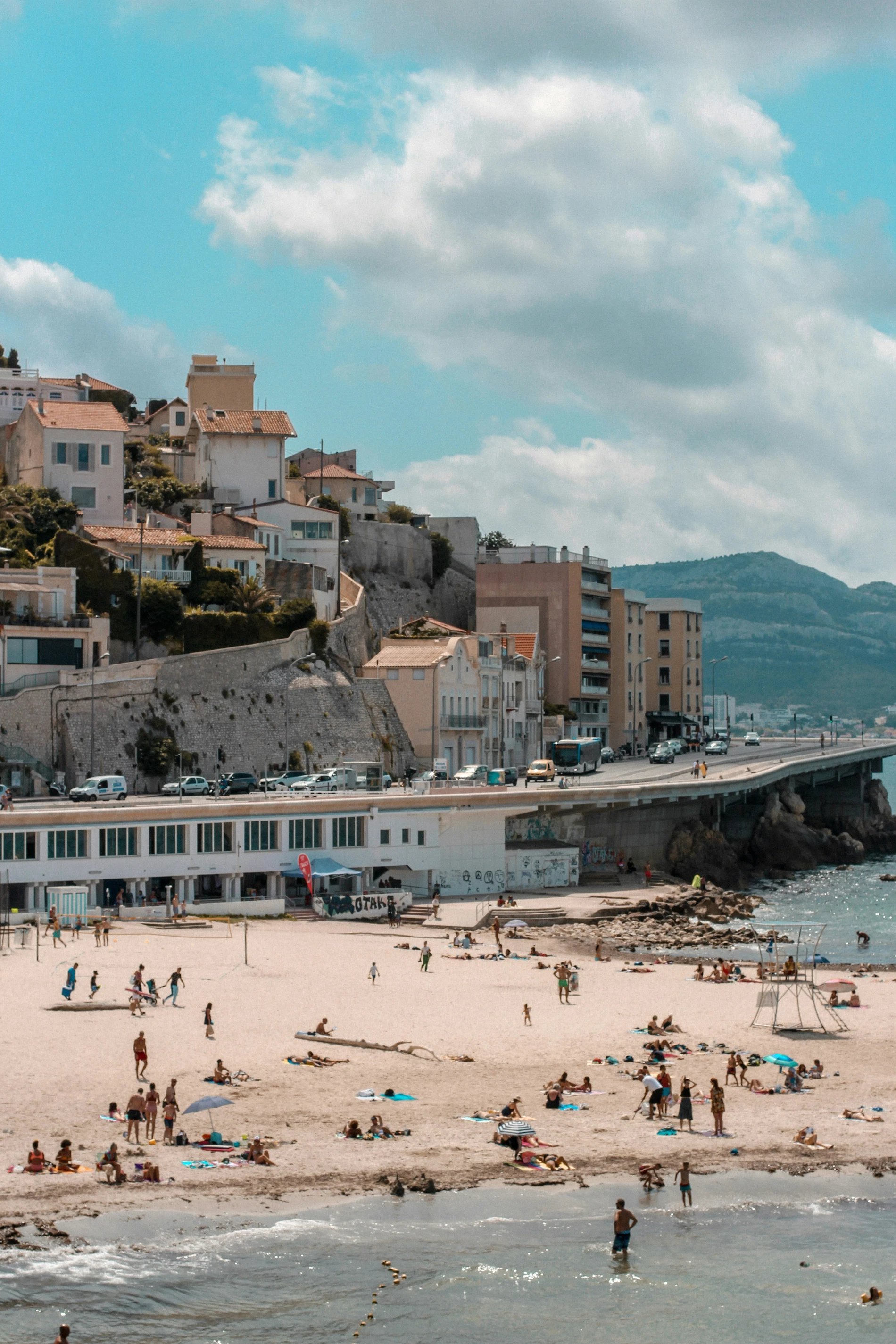
Few cities in France let you go from a morning of culture to a swim in twenty minutes. The Prado beaches, built with rubble from the metro works, offer lawns, playgrounds and supervised swimming in season. Closer to the center, the Plage des Catalans is the most popular city beach, a five-minute bus ride from the old town. Further south, Pointe Rouge adds fine sand, sailing schools, water sports and beach activities for every age, and the maritime shuttle turns the transfer into a mini cruise.
Parc Borély rounds off an afternoon at the plage perfectly, with its 18th-century bastide, a botanical garden, a lake with rowing boats and wide green spaces for a picnic. Rent bikes at the gate, the loop is flat and safe. Families who like to explore parks will also enjoy the Parc du 26e Centenaire, and those who prefer to sleep closer to the sea will find the southern districts well connected.
The Corniche Kennedy is best done on foot or by electric bike. Its bench, said to be one of the longest in the world, runs for nearly three kilometers facing the sea. Stop at the Vallon des Auffes, a tiny fishing harbor tucked under the bridge, where the view opens between two cliffs. At sunset the light turns orange and children watch teenagers dive from the quay.
Sport, adventure and city life for teenagers
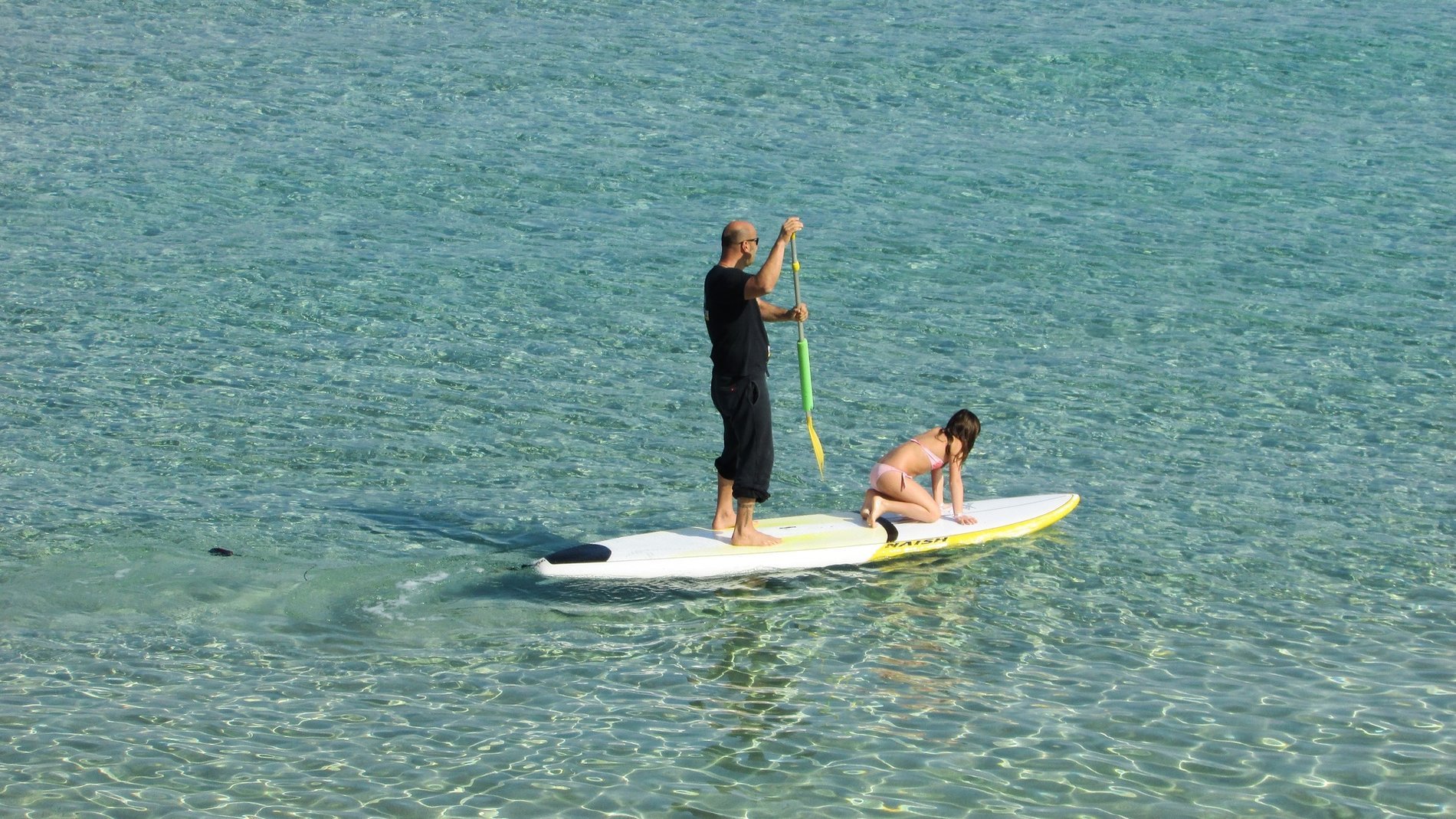
Older children want something other than churches and display cases. Kayak and paddle sessions leave from Pointe Rouge and l'Estaque, with guided outings towards the first coves, one of our favorite ideas for a hot afternoon. Introductory diving starts from about eight years old in most clubs.
Football fans will want the Cepac Vélodrome, the stadium everyone here still calls le Vél. Guided tours take you through the changing rooms, the players' tunnel and out to the pitch of the largest club stadium in France, an outing recommended by our team. Escape games in the center suit children from around eight.
Getting around and easy escapes
Marseille works well as a base for families who want to explore further. Aix-en-Provence is half an hour away by bus or train, a popular morning out for its fountains and market squares. Cassis makes an easy day trip, and the coast towards Nice and the French Riviera opens up from the same station.
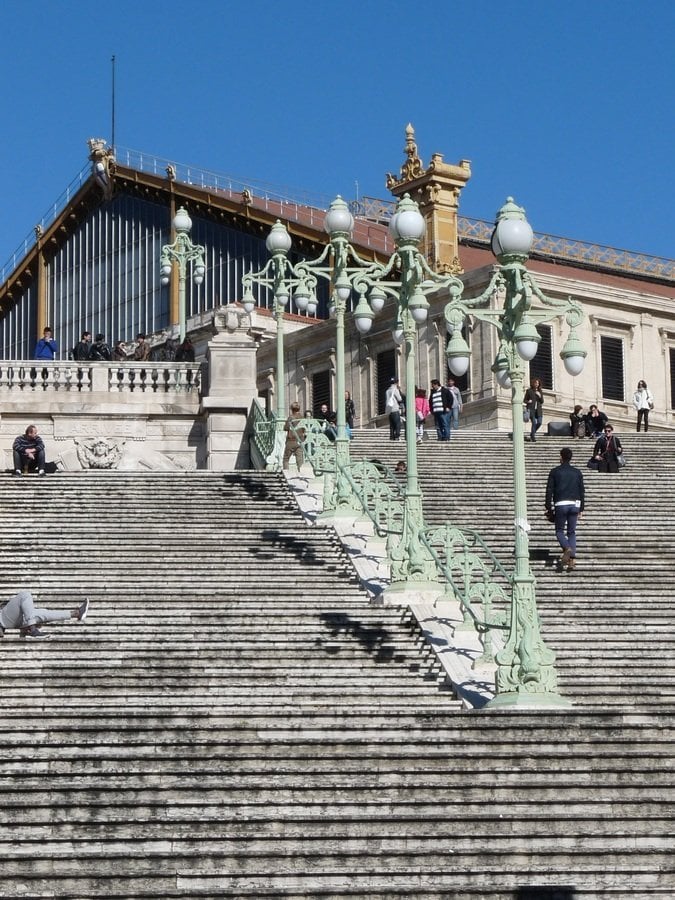
The simplest way to explore Marseille with children is public transport: the metro serves the Vieux-Port a few minutes from our address, close to the main tourist sites, and buses reach the coast. Public transport is cheap and stroller friendly, though the old quarters have plenty of stairs. Gare Saint-Charles puts Paris a little over three hours away, and a shuttle links Marseille Provence airport to the center. No need to search for a rental car.
Getting around and easy escapes
Marseille works well as a base for families who want to explore further. Aix-en-Provence is half an hour away by bus or train, a popular morning out for its fountains and market squares. Cassis makes an easy day trip, and the coast towards Nice and the French Riviera opens up from the same station.
The simplest way to explore Marseille with children is public transport: the metro serves the Vieux-Port a few minutes from our address, close to the main tourist sites, and buses reach the coast. Public transport is cheap and stroller friendly, though the old quarters have plenty of stairs. Gare Saint-Charles puts Paris a little over three hours away, and a shuttle links Marseille Provence airport to the center. No need to search for a rental car.
Hôtel Amista, a Provençal house made for families
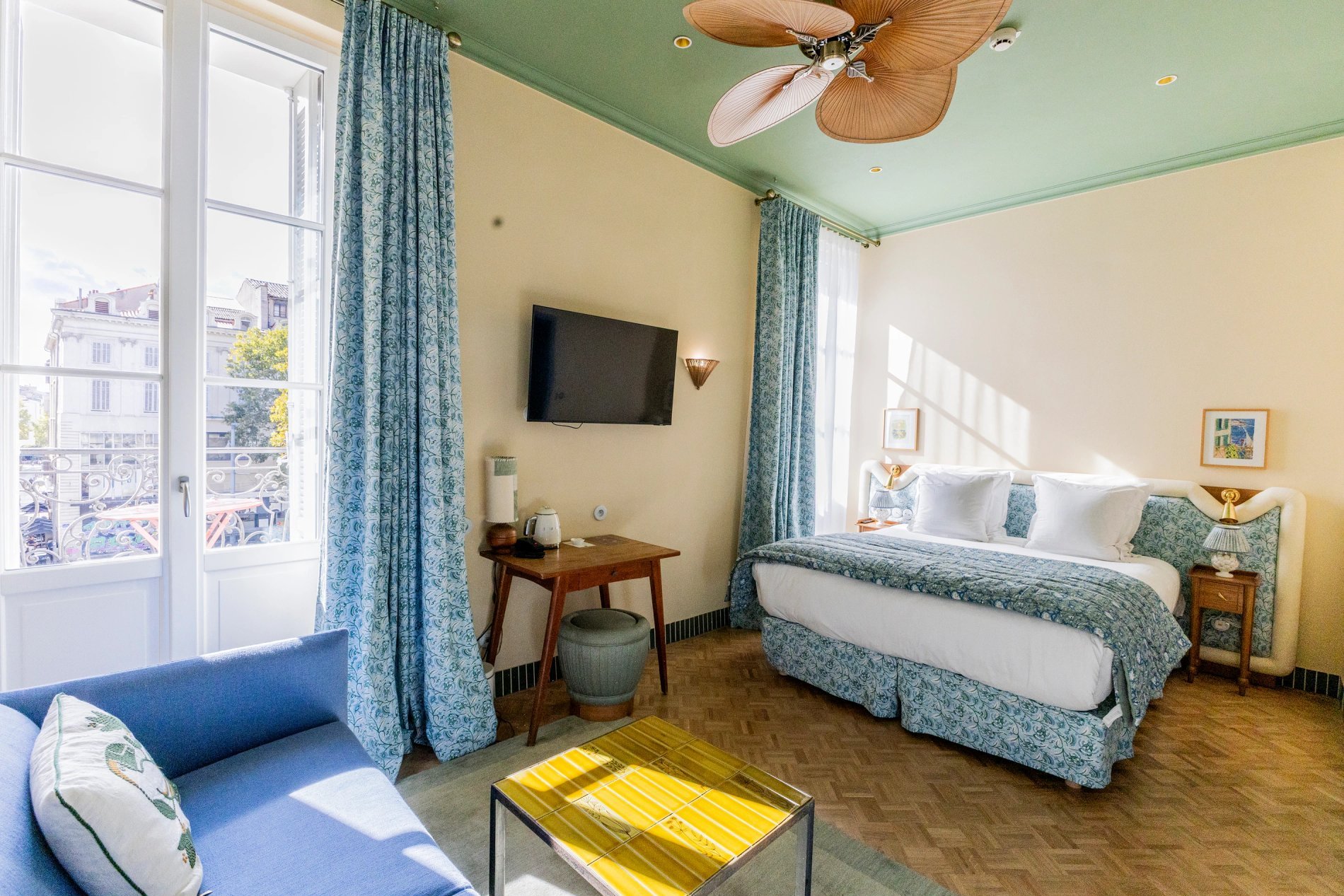
After hours spent between calanques, sightseeing and coves, where you sleep matters as much as what you visited. Among the family hotels in Marseille, Hôtel Amista is a charming Provençal house in the heart of the city, in the 1st arrondissement, two minutes from Noailles and a short walk from the Vieux-Port metro. Renovated and decorated by Dorothée Delaye in pale wood and soft colors, it welcomes travelers with babies, children or teenagers.
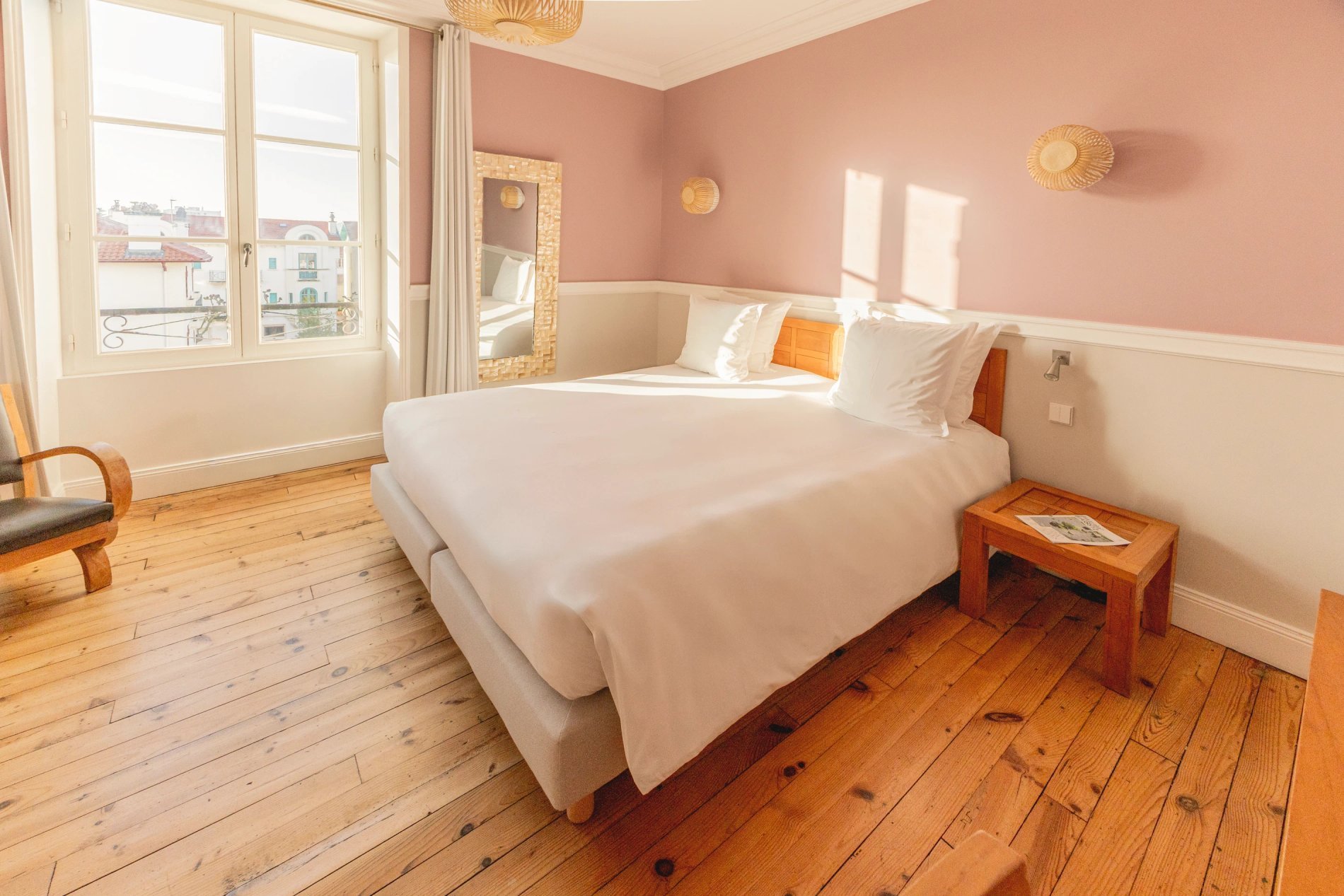
Several categories of family rooms let you pick the right layout, and some sleep up to six people.
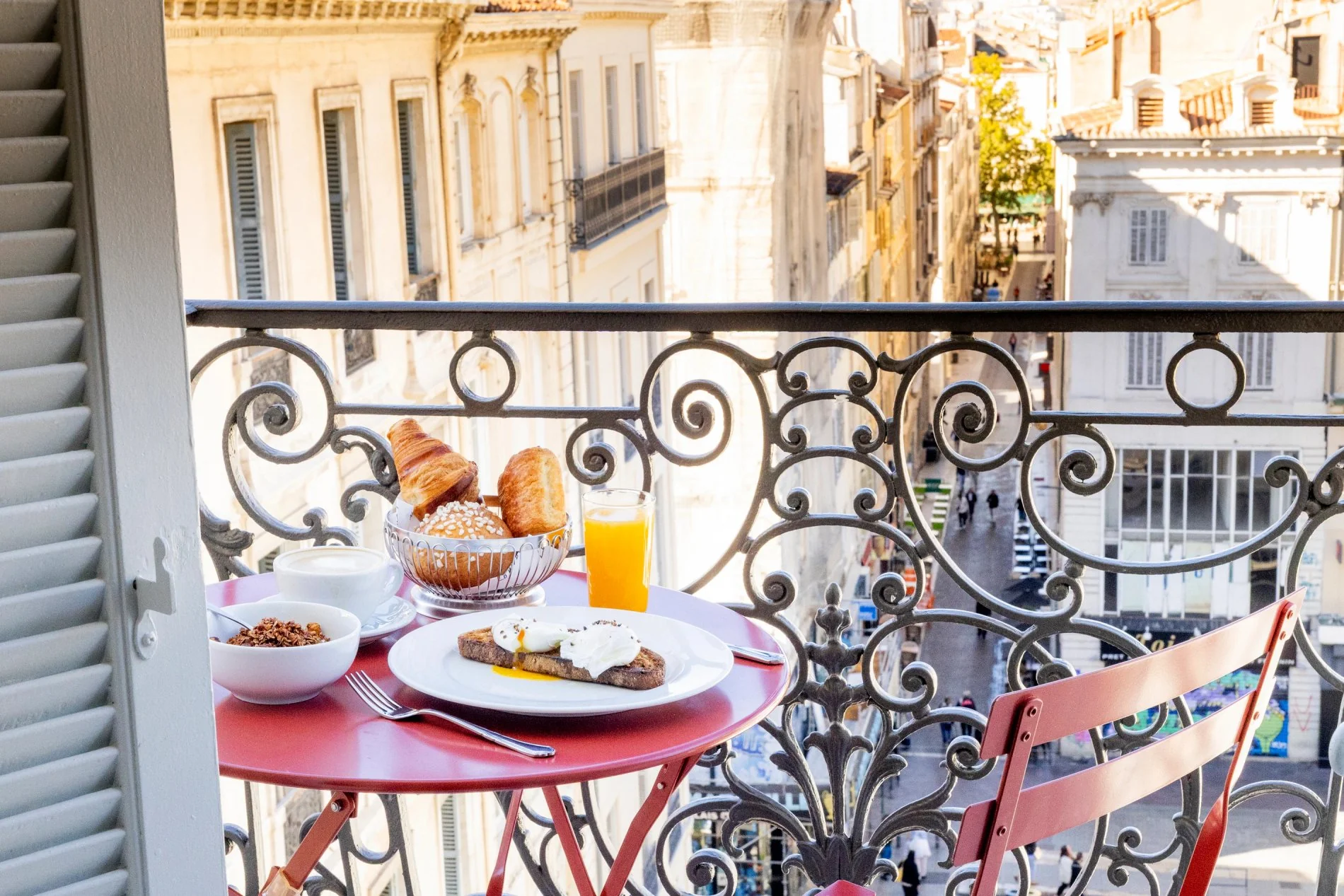
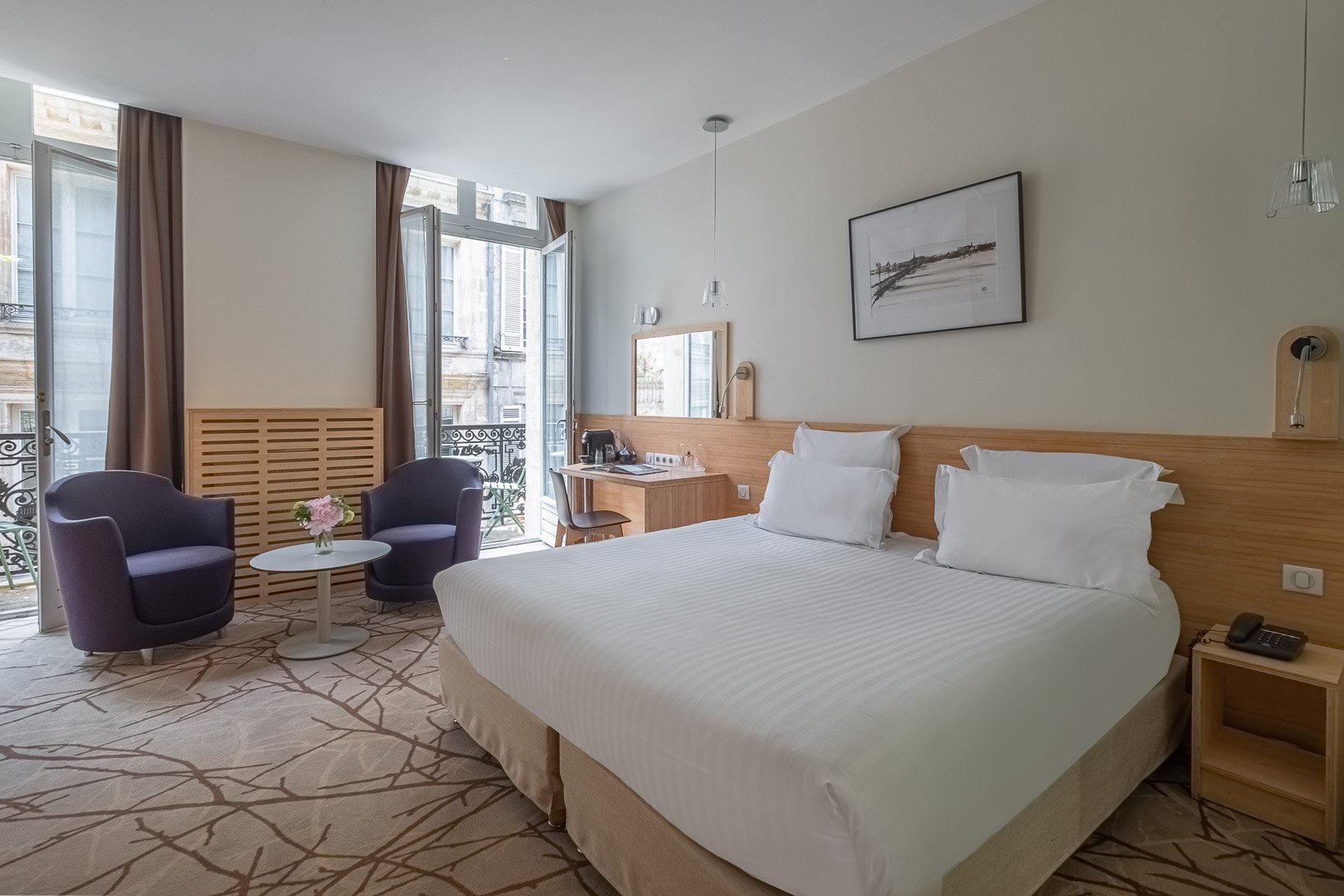
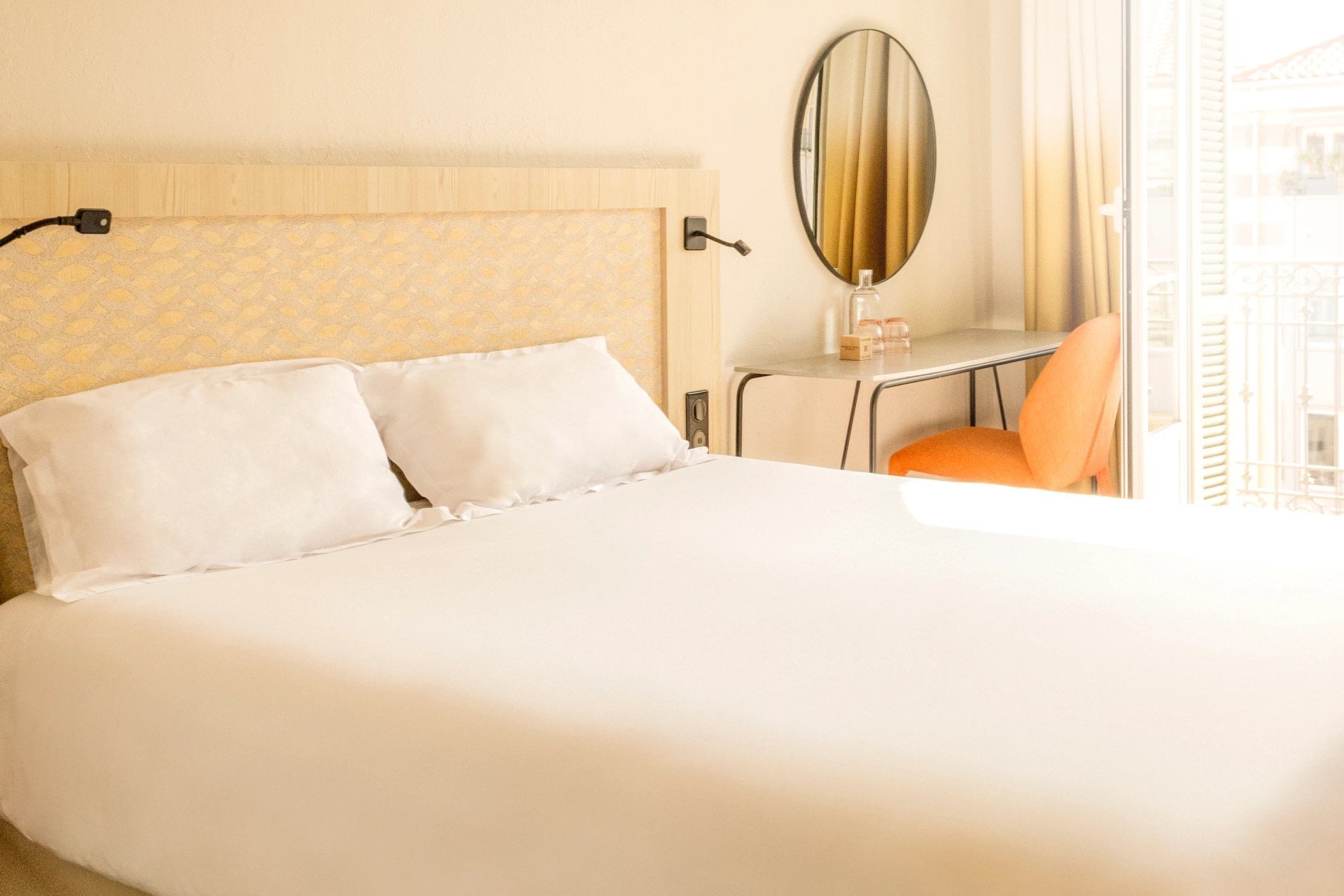
Deluxe Room with Balcony, up to 4 guests. Double or twin beds, a sofa bed, Palace bedding and a balcony with a view over the lively street.
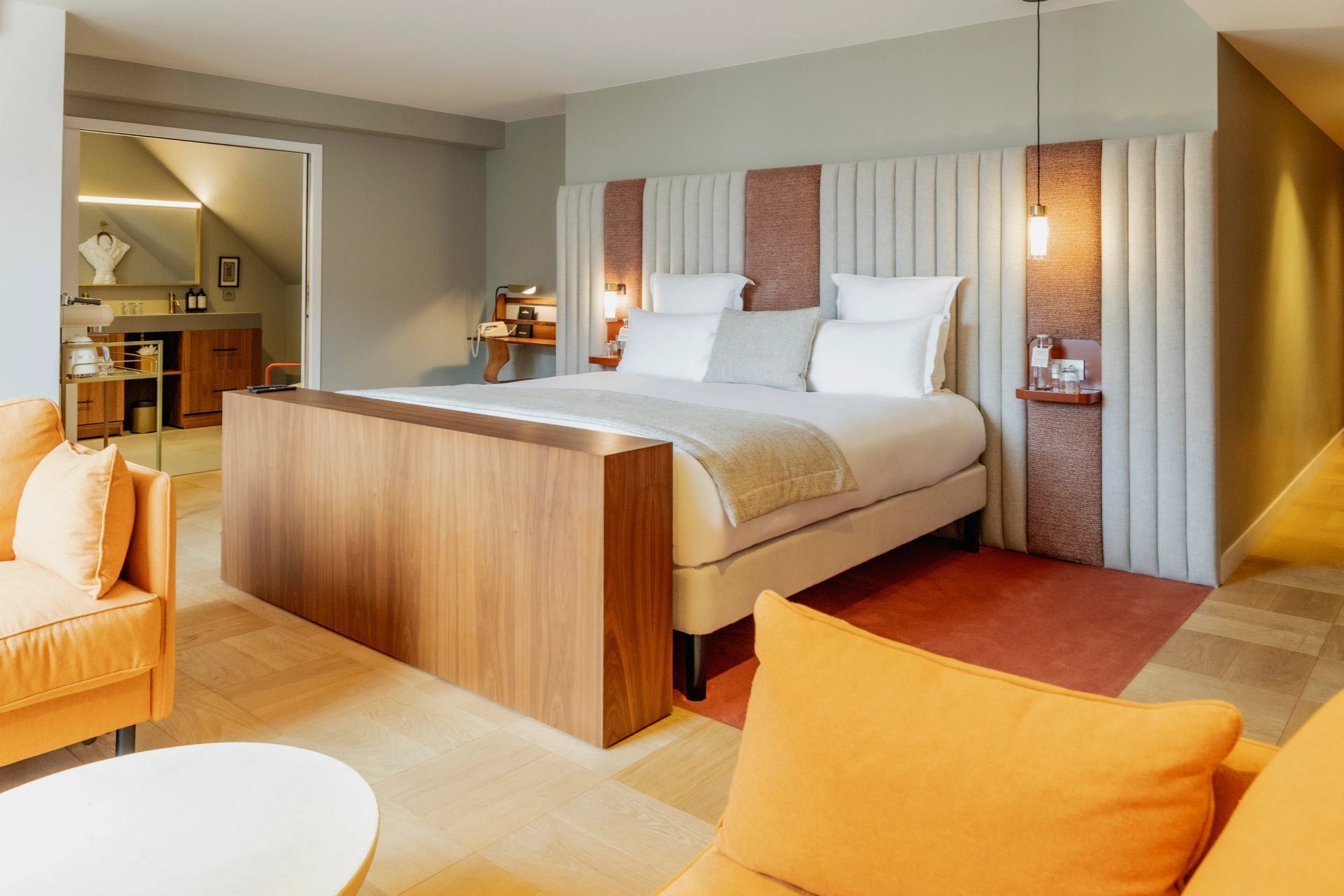
Attic Junior Suite with Kitchenette, up to 4 guests. Three skylights open onto the sky, and the fitted kitchenette suits families with a baby.
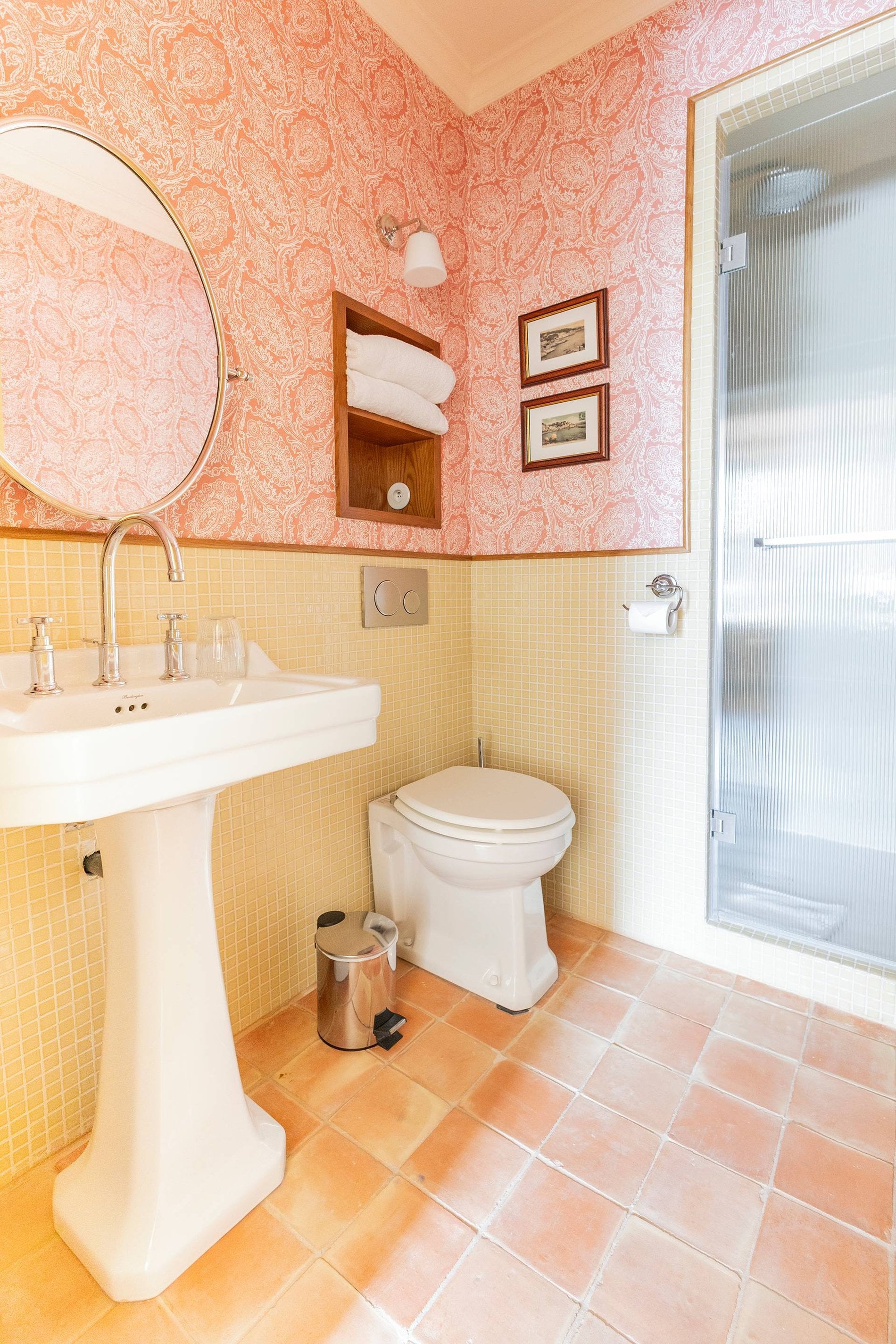
Connecting Superior Rooms with Balcony, up to 4 guests. Two rooms joined by a private door, each with its own balcony and bathroom.
Connecting Deluxe Rooms with Balcony, up to 6 guests. Two large rooms, two bathrooms, two balconies and the option of adding two sofa beds for multigenerational stays.
Services, concierge and the Louison restaurant
Family-friendly services and equipment
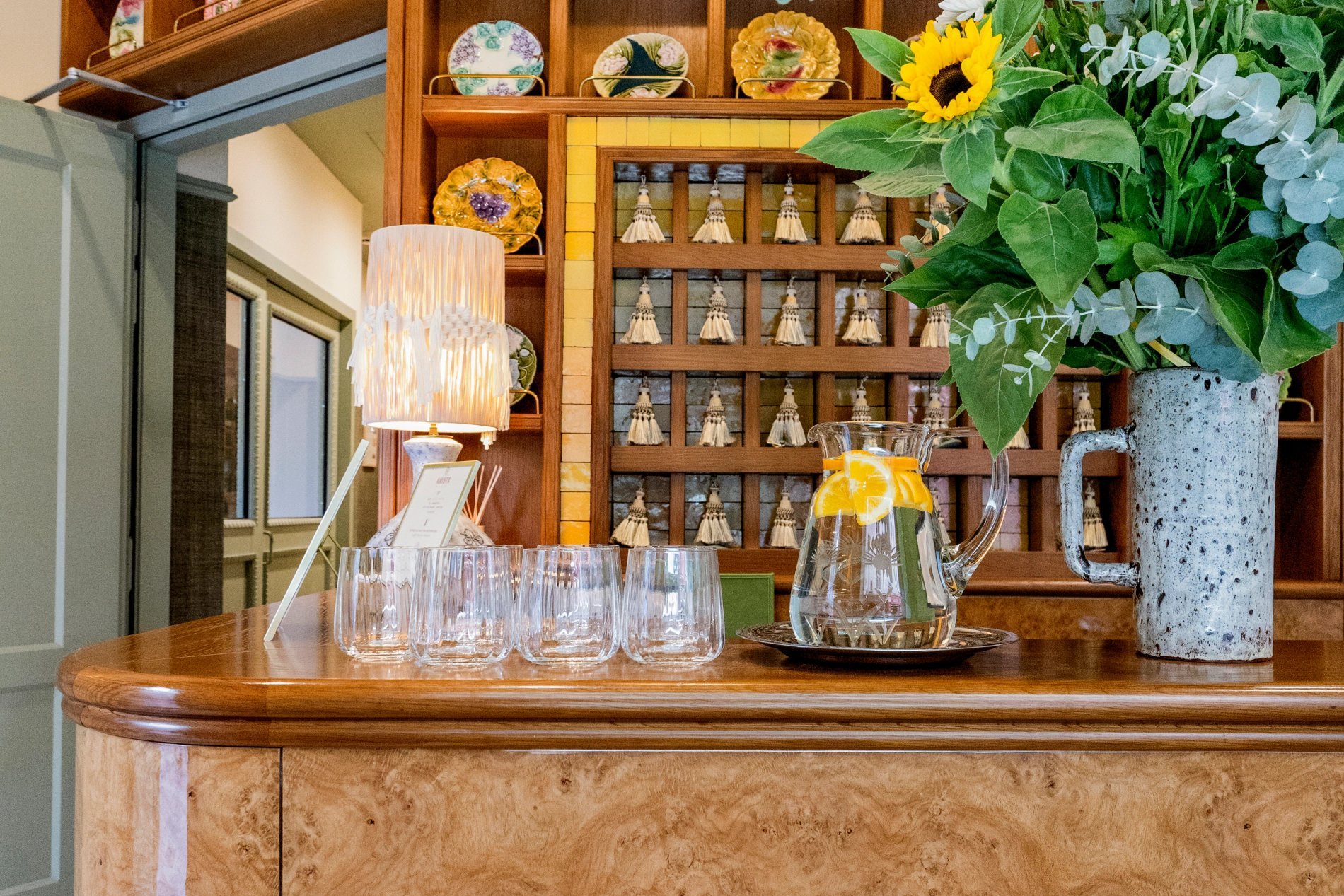
Traveling with children calls for practical details. The hotel offers free WiFi, air conditioning, luggage storage and a 24-hour reception, useful when a train arrives late or a boat tour leaves early. Cots are available on request and pets are welcome.
A team available at any hour
Our team works like a neighborhood concierge service. They suggest family activities according to the age of your children, share their tips and help you plan your itinerary. Two partnerships make outings easier: Eco Calanques for hybrid electric tours in Marseille, and the Mucem for your tickets. Send your questions to our email address, bonjour@hotelamista.fr, and we will email you a short plan before you arrive.
Louison, local cuisine and shared moments
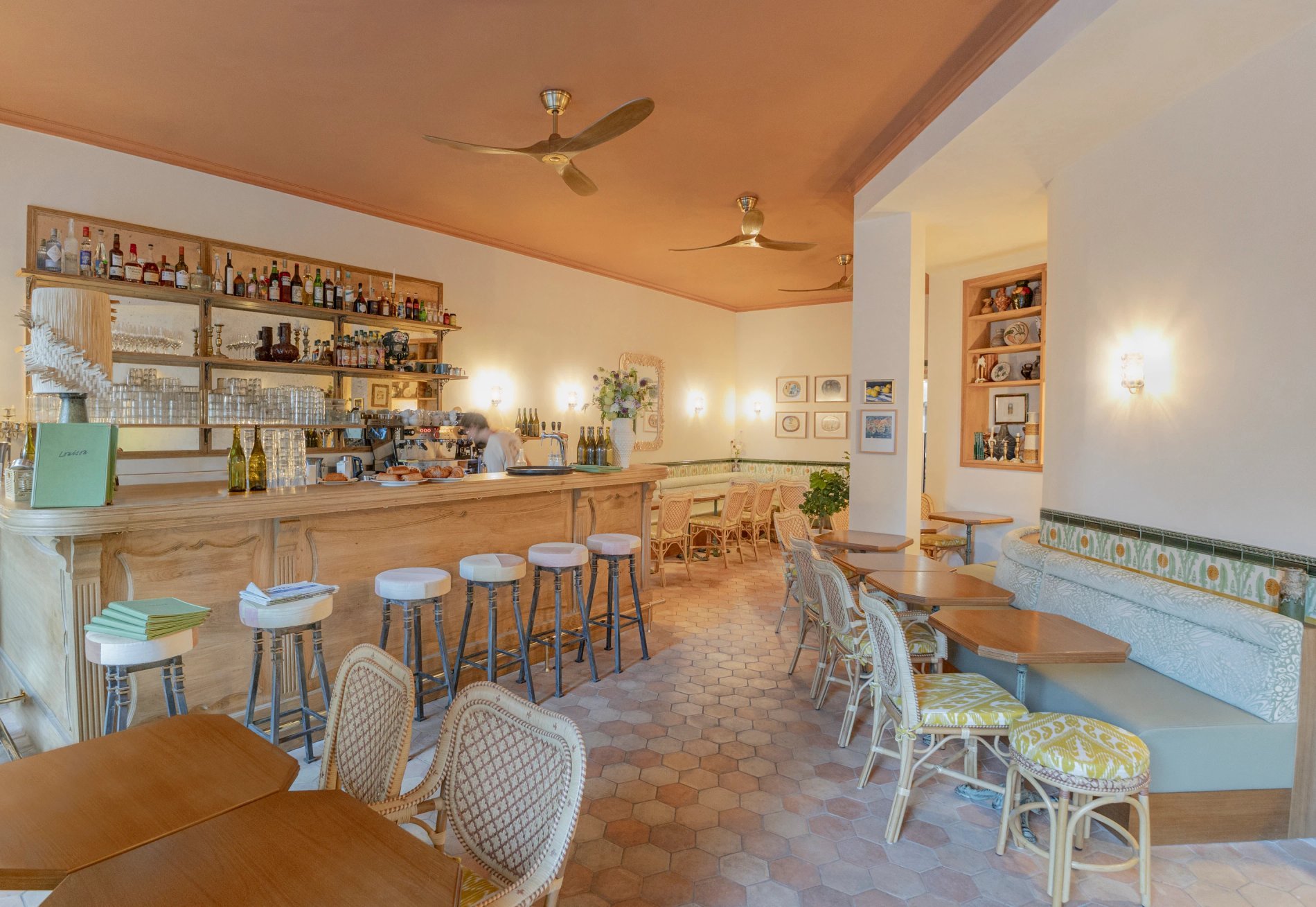
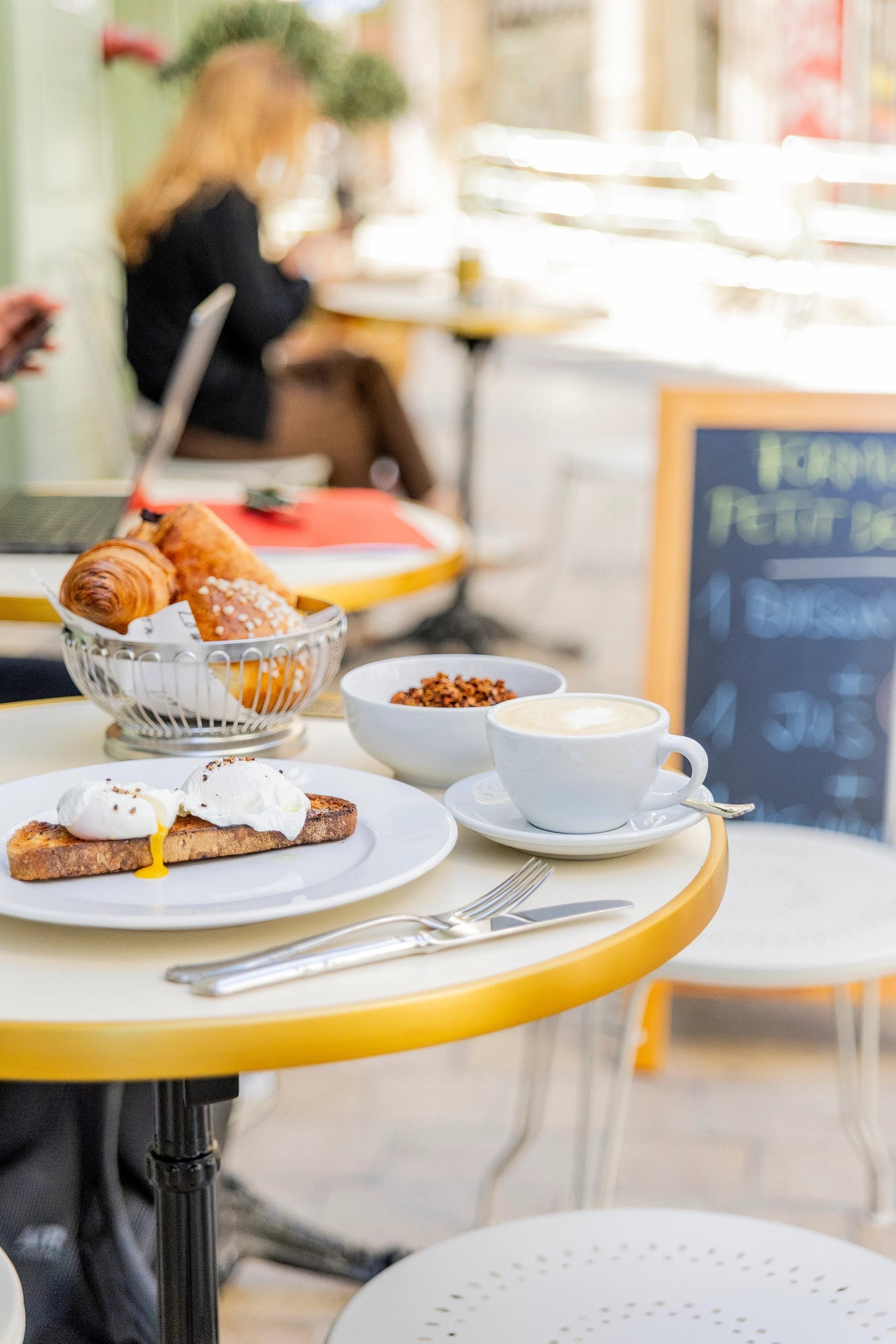
The Louison restaurant is open all day. Mornings bring a generous breakfast of fresh seasonal produce and local coffee. At lunch and dinner, the kitchen serves honest Mediterranean home cooking with dishes children actually eat, which puts it high on any short list of family-friendly restaurants in the area. At weekends, brunch is a favorite with several generations around the same table.
Your family trip to Marseille starts here
Marseille stays with you through the senses: the blue of the coves, warm orange blossom biscuits, wind on the Corniche, the silence of the cells at the Château d'If. Choosing what to do in Marseille with the family comes down to one thing, staying in the right place and letting the city do the rest. Book direct for the best online rate, with up to 12% off.
Frequently asked questions about visiting Marseille with the family
Amista offers 3- to 6-person suites, family rooms and great rates.
Spend the morning around the old port, Le Panier and the Mucem, all walkable. Take the tourist train up to the basilica after lunch for the panoramic views, then finish on the Corniche or at the Catalans beach for a late swim. Our tips: book the train early and create your ultimate travel itinerary around the sunset.
The easiest option is a boat tour from the Vieux-Port, which avoids walking in the heat. For a hike, choose Sormiou or Callelongue with young children. In summer, check the fire risk the evening before and the online booking required for some sites.
Yes. Distances are short, public transport is straightforward, museums run fun things to do for kids, and the sea sits inside the city limits. Most people find that 48 hours covers the essentials, with a third morning for a boat trip.
Hôtel Amista offers family rooms and connecting rooms sleeping up to six, two minutes from Noailles and a short walk from the Vieux-Port metro. Cots on request, pets welcome and a restaurant on site. Families arriving from Paris by train reach us in fifteen minutes.